
Doping & Drugs ·
Danilo Di Luca’s Home EPO Test and Lifetime Ban
The UCI suspended the former Giro winner in May 2013 and his team fired him. In December, an Italian anti-doping tribunal banned him for life for his third doping offense.
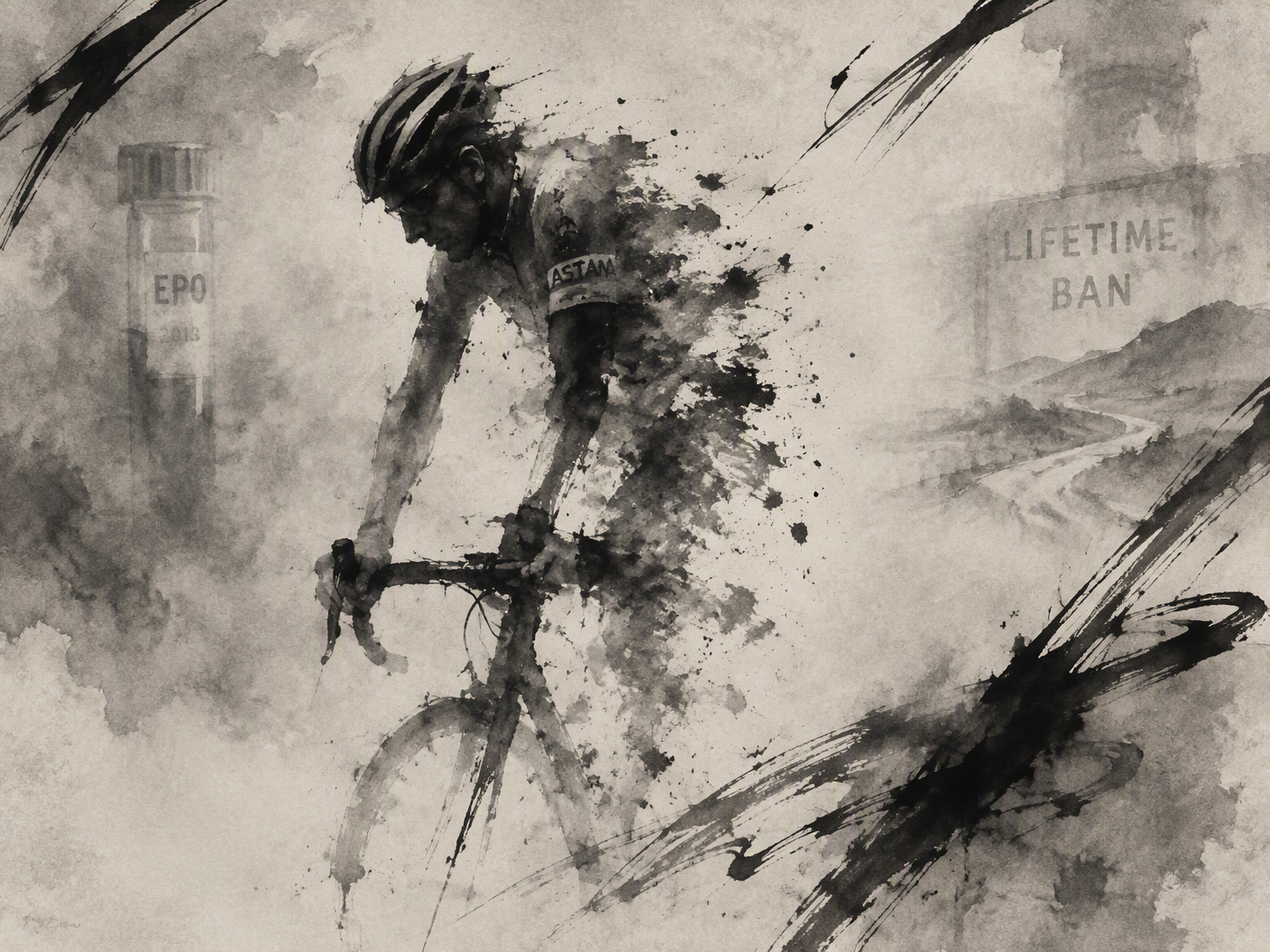
Danilo Di Luca was still riding in the 2013 Giro d’Italia when a positive test from before the race prompted the suspension that ended his participation. On May 24, the International Cycling Union provisionally suspended the 37-year-old Italian after a urine sample collected at his home on April 29 tested positive for EPO, a blood booster. His team, Vini Fantini–Selle Italia, fired him. The former Giro winner had joined the squad just three days before the test.
The UCI said a World Anti-Doping Agency-accredited laboratory in Cologne had reported the finding from the out-of-competition sample. The suspension would remain in force pending a hearing before a panel convened by the Italian Cycling Federation. Di Luca had the right to request and attend analysis of his backup B sample.
Leaving the team hotel, Di Luca expressed surprise and said he would seek the backup analysis. “I wasn’t expecting this. It was a surprise for me. I’m disappointed,” he said, according to the Associated Press. “I’ll ask for the backup analysis, then we can talk again.” He was 26th overall when the suspension removed him from the Giro, days before the race was due to finish.
Within the team, the result reopened an argument over whether he should have been hired at all. Team director Luca Scinto said he had opposed signing Di Luca and had been pressured by the main sponsor. “I’m devastated,” he said. “I never wanted Di Luca in the team.” Scinto called the signing a mistake made after repeated requests from a sponsor who wanted the team to have faith in a rider he regarded as a dear friend. In May, the team was considering a lawsuit over damage to its image; by December, it said it would seek damages.
The prospect of a lifetime ban rested on Di Luca’s disciplinary record, not on three positive tests. After winning the 2007 Giro, he received a three-month ban for frequent visits to Carlo Santuccione, a physician at the center of a doping investigation. In 2009, he tested positive during the Giro for CERA, an advanced form of EPO. He lost his second-place finish and two stage wins, and his initial two-year suspension was later reduced to 15 months.
In May, a lifetime ban was still only a possible outcome. On December 5, the Italian Olympic Committee’s anti-doping tribunal imposed it for Di Luca’s third doping offense. The rider who had returned to the Giro with a new team that spring was barred from cycling for life.