
Doping & Drugs · 2000s
Alexander Vinokourov’s Stage 13 Blood-Doping Test and Astana’s Tour Withdrawal
A positive sample from Alexander Vinokourov’s winning time trial forced Astana to suspend its leader and withdraw from the 2007 Tour de France. After Vinokourov requested B-sample analysis and denied doping, the team dismissed him when the second sample was reported non-negative.
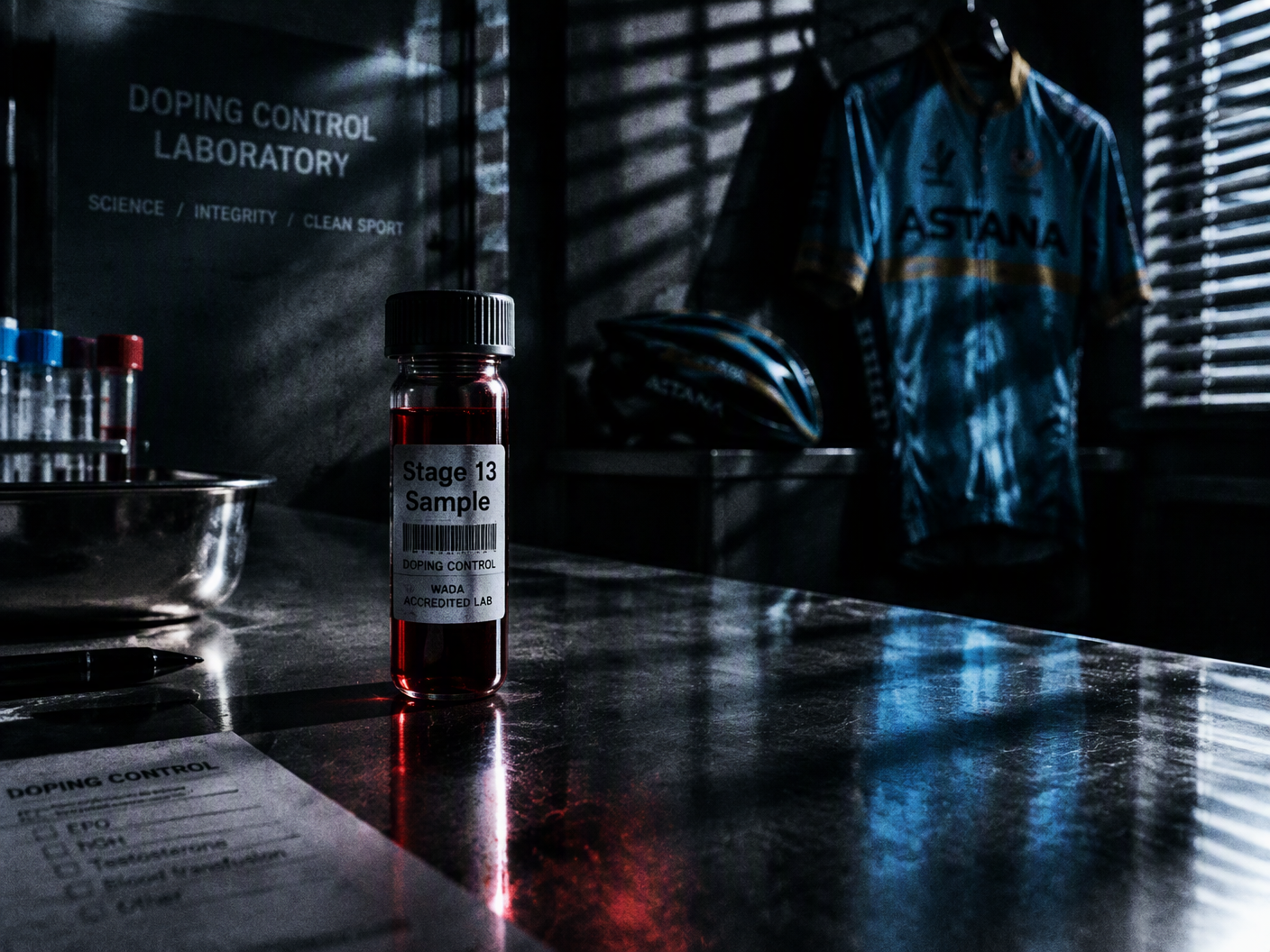
Alexander Vinokourov’s blood sample from the July 21, 2007, Stage 13 time trial tested positive for blood doping. The result transformed a stage victory into an administrative crisis for Astana, the team built around his leadership in that year’s Tour de France. Vinokourov had won the Albi time trial. Within days, the French anti-doping laboratory’s finding would remove Astana from the race, place its leading rider under immediate suspension, and end his contract with the team.
Vinokourov arrived at Stage 13 as Astana’s principal competitive asset and one of the Tour’s pre-race favorites. The time trial gave him the course on which a rider’s individual power could be measured without the usual tactical shelter of a road stage. He won it. The sample collected after that performance became the central object in the case, carrying a consequence that the result sheet did not show: the laboratory finding would reach beyond Vinokourov and attach itself to every rider wearing Astana’s colors.
The positive result was linked to two distinct types of red blood cells in the sample. That pattern was identified as evidence of homologous blood doping, the use of another person’s blood to increase the supply of oxygen-carrying cells. The finding supplied the technical basis for the team’s response. A stage win could be celebrated immediately; the laboratory result required a different process, one that moved from testing to disclosure, from an individual rider to an entire professional team.
Vinokourov did not accept the result as a resolution of the matter. He denied doping and asked for analysis of the B sample, the second portion of the same collected sample reserved for confirmation testing. He also proposed that blood pooling in his thighs after a crash might have produced the abnormal result. That explanation remained unproven, but it defined his response: he challenged the meaning of the laboratory finding while the team and race authorities moved toward consequences.
Astana suspended Vinokourov with immediate effect after the positive test became public. The decision removed him from the team before any B-sample development had been announced. It also separated the rider from the organization that had entered the Tour with him as a central figure. The suspension was not a private warning or a temporary adjustment to the race roster. It was the first formal action taken by Astana against its own leader.
On July 24, Astana withdrew from the Tour de France. The team’s exit converted an adverse test involving one cyclist into a collective sporting consequence. Riders, staff, and the organization lost their remaining place in the race because the team could no longer continue under the conditions created by Vinokourov’s result. The withdrawal also ended Astana’s participation before the competition reached Paris, only days after its leader had won the time trial that made him the team’s most visible success.
The sequence mattered because each decision carried a different authority and consequence. The laboratory finding identified the test result. Astana imposed the immediate suspension. The team then withdrew from the Tour, taking an organizational step that affected every member of its delegation. These were not interchangeable penalties. They marked the progression from a sample associated with Vinokourov, to a restriction on Vinokourov, to the removal of Astana itself from the race.
Vinokourov’s request for B-sample analysis kept the dispute open while those actions took effect. The second sample was intended to address the first result, but it did not restore Astana’s place in the Tour or reverse the immediate suspension. The team had already acted on the public finding. Its withdrawal had already imposed the measurable cost of lost competition, lost exposure, and a race abandoned before the final stage.
A second turning point came on July 30. Astana received confirmation that Vinokourov’s B sample was non-negative, and the team sacked him. The dismissal ended his position with Astana after the suspension and withdrawal had already taken effect. The order of events was precise: first the Stage 13 sample tested positive, then Vinokourov denied doping and requested the second analysis, then Astana suspended him and withdrew, and finally the team terminated its relationship with him.
The dismissal also showed how quickly the team’s posture changed from containment to separation. Astana had entered the Tour with Vinokourov as a leading rider; after the laboratory result, it removed him from the roster, left the race, and ended his employment. His crash explanation did not alter those decisions. Nor did his denial prevent the team from treating the B-sample development as sufficient grounds for dismissal.
By July 30, the consequences were therefore complete within the defined episode. A victory in Albi had been followed by a positive blood-doping test tied to two types of red blood cells. Vinokourov had challenged the finding and requested the B sample. Astana had suspended him, withdrawn from the Tour, and then sacked him after the second sample was reported non-negative. The race result remained on the page; the team that produced it did not remain in the race.
Investigative Dossier & Evidence
Read the companion investigation notes, verified source claims, and primary documents.
Read the Companion Notes & Evidence Record →