
Scandals & Feuds ·
The Missing Peugeot That Ended Vatanen’s 1988 Dakar
After a reported theft and ransom demand in Bamako, the rally leader’s car was recovered too late for the required start. Vatanen was excluded—and rejected theories of a staged disappearance.
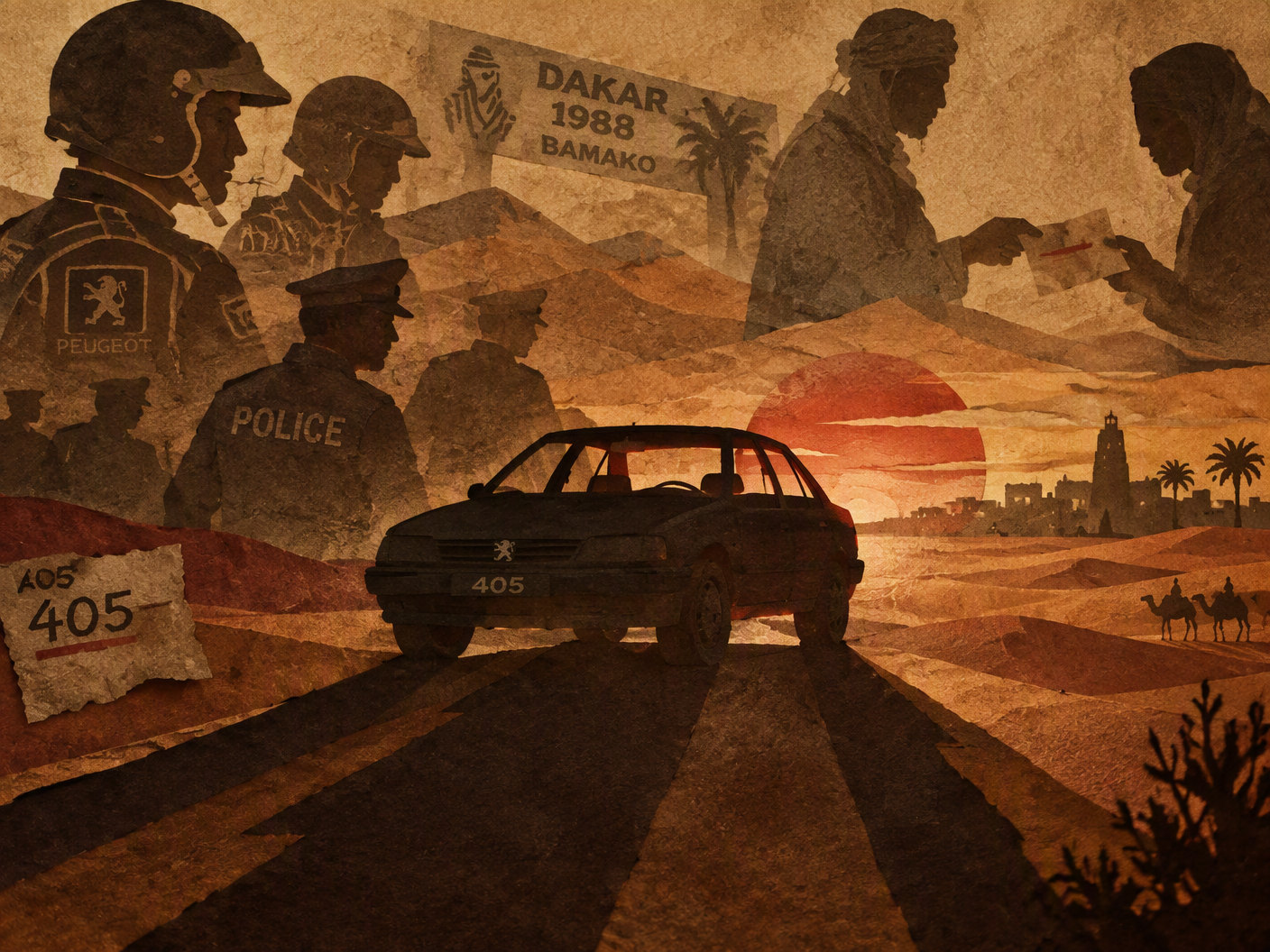
Ari Vatanen reached Bamako leading the 1988 Paris–Dakar. By the morning of January 18, his Peugeot 405 was missing, and the team had received a ransom demand. The car would be recovered in a field, but not in time to save his place in the rally. A contest he had been leading became a search for the machine he needed simply to continue.
Vatanen had won the Dakar the previous year. This time, he and co-driver Bruno Berglund were still at the front when they completed the journey from Timbuktu to the Malian capital on January 17. The overnight disappearance interrupted that run without a racing accident or a breakdown being established as its cause. “We thought we were in a movie,” Vatanen recalled in the Dakar organisation’s retrospective.
Early that morning, Peugeot’s team manager was told that the car had been stolen and would be returned only for 25 million CFA francs, according to that retrospective. Jean Todt, who headed the Peugeot team, was occupied with the telephone while the search unfolded. In his later account for the Spanish newspaper ABC, Santiago de Garnica Cortezo described police, soldiers, organisers and journalists looking for the missing 405 as other crews prepared to leave.
The search and the rally clock were running together. Competitors had assigned departure times, with a permitted margin of 30 minutes. ABC’s account describes timekeepers warning Peugeot that there would be no exception. By the time the car was found, Vatanen had missed the required start.
The Peugeot was found in a field near the start. ABC described it as intact, with its tanks full. Vatanen was excluded from the rally, and his teammate Juha Kankkunen went on to win. The recovery restored the car to Peugeot; it did not restore Vatanen to the competition.
What had happened during the disappearance attracted competing explanations. Peugeot’s official version, reported by ABC, blamed a criminal group in Bamako and said the person driving the car had failed to operate its fuel system correctly. That was the team’s account, not an established identification of the culprits. ABC also recounted a theory advanced by the rally figure and writer known as Fenouil: that Peugeot had moved the car to attempt a prohibited engine replacement. The allegation was a theory, not a demonstrated repair scheme.
Vatanen rejected the suggestion that the disappearance had been staged. Asked about Bamako, he maintained that the car had been stolen and that he would never have permitted a sham. He pointed instead to the consequence: he had lost the race because of the affair.