
Scandals & Feuds ·
A disputed death toll after Guinea’s stadium crush
Crowd disorder and police tear gas preceded the deadly rush in Nzérékoré. Rights groups challenged the provisional count as authorities promised an inquiry and warned against unverified information.
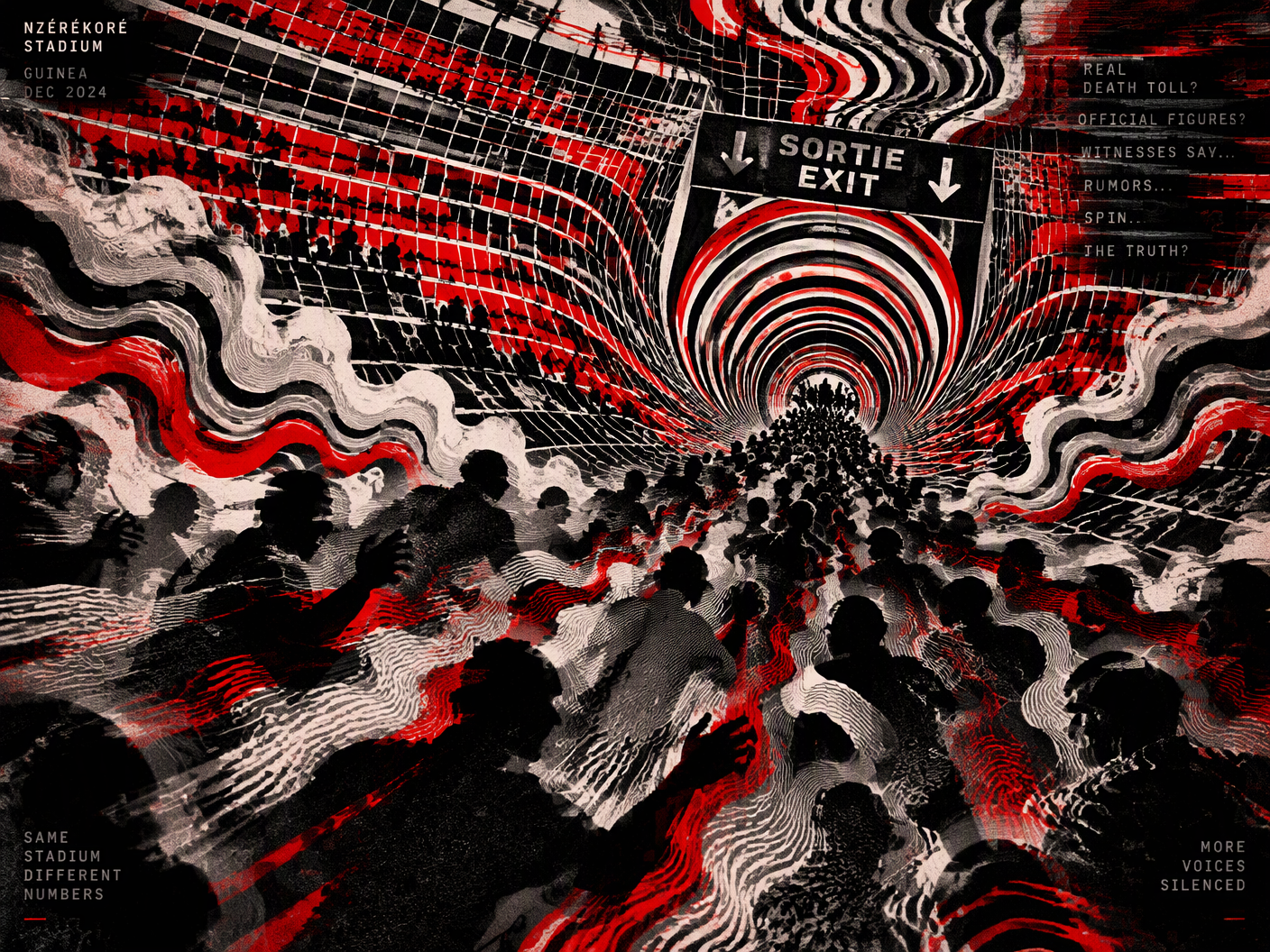
A disputed refereeing decision at a football match in Nzérékoré, Guinea, on 1 December 2024 was followed by crowd disorder, police tear gas and a deadly rush to escape. The government put the provisional death toll at 56. Within days, a regional collective of human-rights organizations estimated that 135 people had died, mostly children under 18, and said more than 50 others were missing.
The match was the final of a tournament organized in honour of Mamady Doumbouya, the head of Guinea’s military-led government, who seized power in a 2021 coup. According to videos and testimony analysed by Amnesty International, the disputed decision led to incidents on the field and then in the stands, followed by police use of tear gas. A journalist who attended the match told Amnesty that panic spread among the thousands of spectators.
“The police fired tear gas to make the crowd leave the field. They fired at the field and also at the stands,” the journalist said. “The crowd took fright and headed for the main gate, which was the only way out.” Another journalist told Amnesty that police intensified the tear-gas fire to clear a path for ministers at the stadium.
The regional rights collective accused security forces of using excessive tear gas and putting officials’ safety ahead of spectators’. It also alleged that vehicles carrying officials and others leaving the stadium struck people trying to flee, and that security forces obstructed the gate of an overcrowded venue. The government had not responded to the collective’s statement by 4 December. Amnesty called for an independent and impartial inquiry into the deaths and whether police had made all reasonable efforts to limit risks to the crowd.
The government said its provisional count came from hospital services. In its 3 December statement, the collective said it had drawn on information from the hospital, cemeteries, stadium witnesses, victims’ families, mosques, churches and the local press. People interviewed by Amnesty said burials in several cemeteries exceeded the official count. One told the organization that not all the victims had passed through the regional hospital.
In the days after the crush, Doumbouya pledged to establish a commission of inquiry to determine its cause and hold perpetrators accountable. The government also warned against publishing “unverified or malicious information” about the incident. In a Facebook video published late on 3 December, Justice Minister Yaya Kairaba Kaba said anyone engaging in such conduct would be arrested and prosecuted.
Amnesty said internet access in Nzérékoré was restricted for a week after the disaster, limiting the circulation of information and videos. In its statement two weeks after the crush, the organization said the authorities had offered no explanation for the restriction.
The count of the dead was still being assembled in that early aftermath. A civil-society member contacted by Amnesty on 11 December said: “For the moment, we are maintaining the figure of 135 dead, but we know that it will change. We will be able to give an exact figure once we have completed the ongoing census.”