
Violence & Brawls ·
Harumafuji Retired After Assaulting Takanoiwa, Then Faced a Summary Indictment
The sumo grand champion admitted punching the younger wrestler and striking him with a karaoke remote control in Tottori in October 2017. He retired the next month.
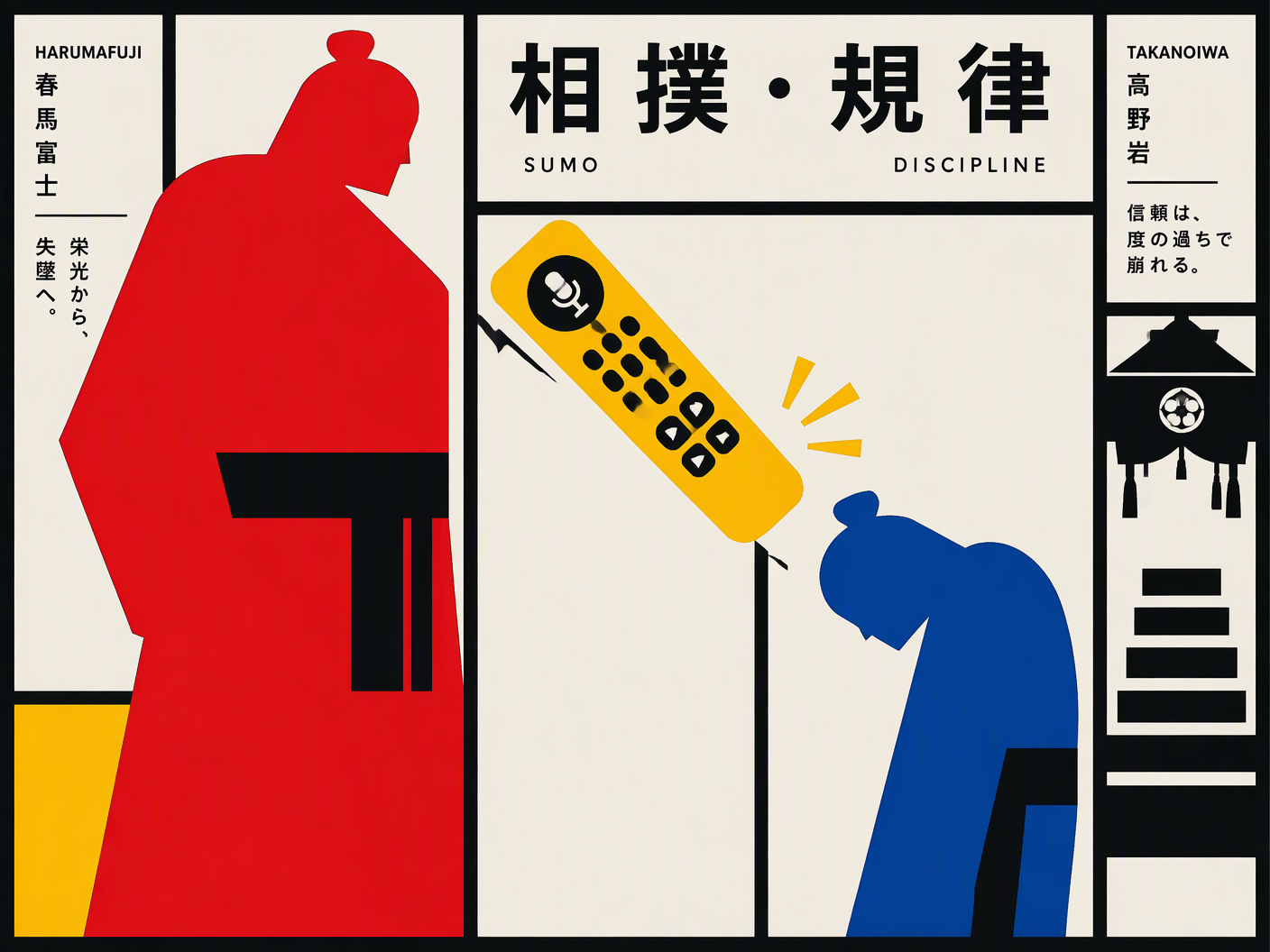
At a restaurant-bar in Tottori in late October 2017, sumo grand champion Harumafuji injured a younger wrestler, Takanoiwa, during a gathering with other wrestlers. Harumafuji later admitted punching him and striking him with a karaoke remote control, causing a skull fracture. He retired in November, and prosecutors filed a summary indictment in December.
Harumafuji, 33, was Mongolian-born; Takanoiwa, 27, was a lower-ranking Mongolian wrestler. According to a report by the Japan Sumo Association’s crisis management committee, Harumafuji became angry when Takanoiwa checked his smartphone after grand champion Hakuho had chastised him for a bad attitude. The violence came during a senior wrestler’s reprimand, not a contest in the ring.
Takanoiwa missed the November tournament in Fukuoka because of injuries that the sumo association said included a fractured skull and concussion. Harumafuji also withdrew from the tournament while police investigated.
On November 29, Harumafuji announced his retirement at a news conference in Fukuoka carried live by several Japanese broadcasters. He had been promoted to yokozuna, sumo’s highest rank, in 2012 and had won nine grand tournaments, most recently that September. He said he was leaving the sport to take responsibility for injuring Takanoiwa.
Harumafuji apologised to fans, the sumo association and those who had supported his stable. He also described what he considered a senior wrestler’s obligation. “I think it is my duty as a senior wrestler to correct and teach junior wrestlers when they are lacking in manners and civility,” he said. “But I went too far.” He said the incident had not occurred because he had been drinking.
His stablemaster and longtime mentor, Isegahama, said he had never seen Harumafuji engage in violence. He nevertheless said Harumafuji was chiefly to blame for harming the status of yokozuna and should not blame others. At the time, police and sumo association investigations were still underway; the retirement was not a final disciplinary ruling.
In late December, prosecutors in Tottori filed a summary indictment over a wound that an official at the local prosecutors’ office said Harumafuji had caused with the remote control. The summary procedure sought payment of a fine rather than a trial.
In a statement released by his lawyer after the indictment, Harumafuji said his life would be sharply different from what he had expected. “I have a feeling of chagrin, to be honest,” he said. “But the responsibility is all mine.”