
Scandals & Feuds · 2020s
The Jantar Mantar Protests and FIRs Against Brij Bhushan Sharan Singh
Indian wrestlers turned allegations against Wrestling Federation of India chief Brij Bhushan Sharan Singh into a public campaign at New Delhi’s Jantar Mantar. After an administrative intervention failed to end the dispute, Delhi Police registered two FIRs on 28 April 2023, including one under the POCSO Act.
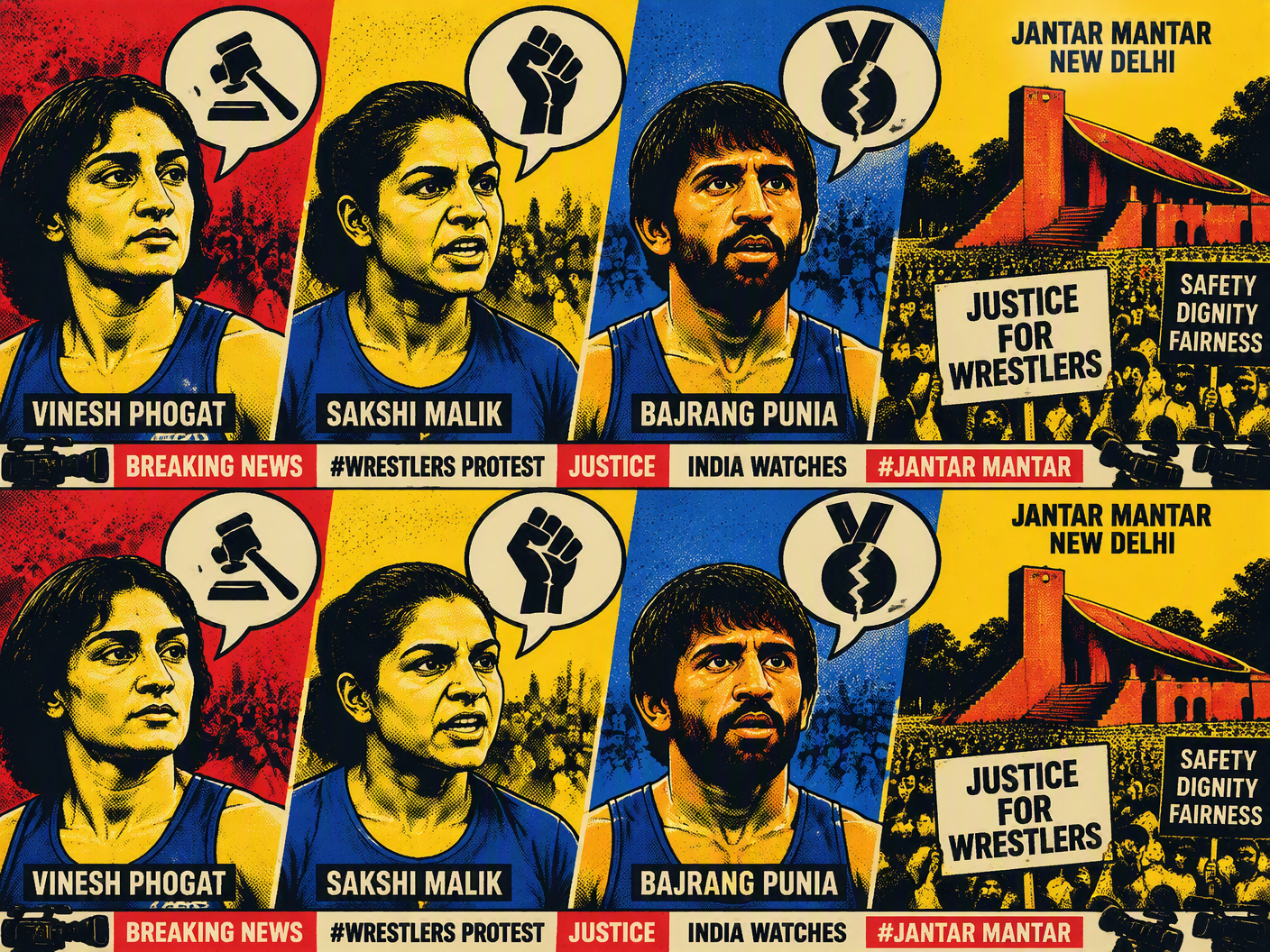
On 28 April 2023, Delhi Police registered two first information reports against Brij Bhushan Sharan Singh after the Supreme Court intervened. One invoked the Protection of Children from Sexual Offences Act, known as POCSO, in connection with a complaint by a minor. The filing changed the status of a dispute that had begun in public protest: allegations directed at the president of the Wrestling Federation of India entered the criminal process. Singh, a BJP member of Parliament as well as the federation’s chief, had denied the allegations. The police action supplied the formal step the wrestlers had demanded.
Three months earlier, in January, Vinesh Phogat and about 30 other wrestlers gathered at Jantar Mantar in New Delhi for a protest against Singh. They demanded action and accused him of sexually harassing female wrestlers. Sakshi Malik, an Olympic medal-winning wrestler, joined the sit-in. Bajrang Punia, also an Olympic medal-winning wrestler, stood with the protesters and later demanded Singh’s arrest. Their participation moved the dispute beyond the Wrestling Federation of India’s internal hierarchy and placed its president’s conduct before the public.
The protest put Singh’s authority at the center of the dispute. As WFI president, he controlled the federation’s leadership while also holding a national political office. The wrestlers’ accusation challenged both roles at once: the official responsible for their governing body was also a sitting lawmaker with access to the country’s political system. Singh denied the allegations in interviews. The opposing accounts created a conflict that could not be resolved by a federation statement or a change in administrative personnel alone.
Phogat connected the January protest to an earlier complaint. She said that after the Tokyo Olympics in 2021, she had told Prime Minister Narendra Modi about mental torture and harassment. Her account framed the 2023 action as a continuation of an unresolved complaint rather than an isolated confrontation at Jantar Mantar. It also placed the wrestlers’ demand within a longer chain of escalation, from an alleged warning at the highest political level to a public request for intervention against the federation chief.
The first protest produced an administrative response. The wrestlers said they withdrew in January after the sports ministry stripped the WFI top brass of its administrative powers and formed an oversight committee. That decision temporarily shifted control away from the federation’s senior leadership, but it did not satisfy the protesters’ demand for action against Singh. The sit-in paused; the dispute did not. The ministry had altered the federation’s administration, while the wrestlers continued to seek a consequence directed at its president.
In April 2023, Phogat, Malik, Punia, and other wrestlers resumed the sit-in at Jantar Mantar. The demand had sharpened. They called for Singh’s arrest. Their return followed the temporary administrative intervention and showed that an oversight committee was not the outcome they considered sufficient. The protesters were no longer asking only for the federation’s senior leadership to lose administrative control. They were pressing for criminal enforcement against the man who still occupied the federation presidency and a seat in Parliament.
The transition from protest to police case came on 28 April. After intervention by the Supreme Court, Delhi Police registered two FIRs against Singh. An FIR is the document by which police formally record a cognizable complaint and begin an investigation; it is not a conviction. Here, the filing supplied the legal structure the protests had been demanding. It identified Singh as the accused, placed the complaints in Delhi’s criminal system, and separated them from the federation’s internal oversight process.
By 2 June, the FIRs had set out allegations of inappropriate touching, stalking, and demands for sexual favours. Delhi Police booked Singh under Indian Penal Code sections 354, 354A, 354D, and 34, and under the POCSO Act. One case concerned a minor’s complaint. The allegations described conduct attributed to Singh by the complainants; they did not settle whether that conduct occurred. That legal distinction existed from the moment the police registered the cases, even as the filings created consequences for Singh and the federation he led.
Singh denied the allegations. The police registration did not produce a documented 2023 arrest, conviction, or final judicial determination. It did place him under provisions addressing sexual harassment, stalking, common intention, and an alleged offense involving a minor. Those categories converted the dispute from an argument over sports administration into a criminal investigation with police powers and court oversight. The wrestlers’ demand for arrest remained distinct from the act of registering an FIR.
The distinction carried particular weight because the campaign involved adult Olympic medalists and a minor’s complaint. Phogat, Malik, and Punia used their public standing to keep the dispute visible at Jantar Mantar and to demand action against Singh. The government response moved in stages: first the sports ministry removed administrative powers from the WFI’s top brass and created an oversight committee; later, after Supreme Court intervention, Delhi Police registered two FIRs. Each step changed the institutional position of the federation. None resolved the allegations.
By 2 June 2023, Singh’s name appeared in two Delhi FIRs, one of them invoking POCSO, while he continued to deny the allegations. The wrestlers had moved from an administrative demand to a demand for arrest; the state had moved from oversight to criminal registration. The documented consequence of that period was not a verdict. It was the filing of cases that placed allegations of harassment, stalking, sexual demands, and conduct involving a minor before Delhi’s police and courts.
Investigative Dossier & Evidence
Read the companion investigation notes, verified source claims, and primary documents.
Read the Companion Notes & Evidence Record →