
Doping & Drugs ·
Canseco’s Juiced Put Steroid Admissions—and Disputed Accusations—in Print
The 2005 book paired an account of Canseco’s own drug use with allegations against former teammates. Denials, congressional testimony and Palmeiro’s failed test followed without proving Canseco’s separate allegation against him.
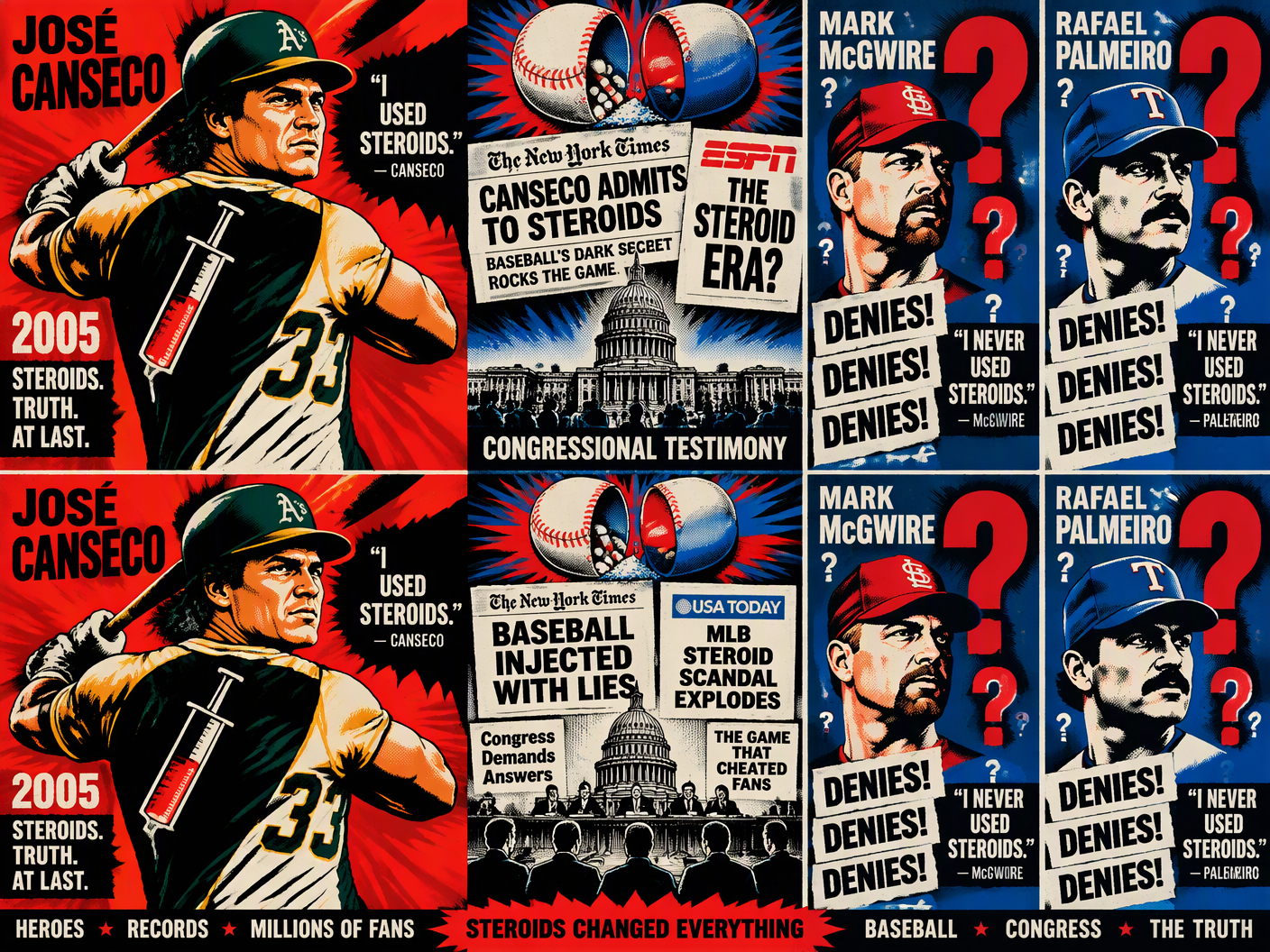
When José Canseco’s Juiced reached bookstores in February 2005, the former slugger was admitting to years of drug use—and accusing former teammates of using steroids. His account was not a plea for forgiveness. In the book and an interview with 60 Minutes, he described steroids and human growth hormone as instruments of his success while making allegations that some of baseball’s biggest names disputed.
Canseco told correspondent Mike Wallace that he had used the drugs from his first major-league season through his last, in 2001. Asked about his assertion that he would never have been a major-league-caliber player without steroids, he answered: “Well, it’s a true statement. No ifs and buts about it.” He described injections into his buttock and credited the drugs with strength, stamina and a psychological edge. In 1988, he had hit 42 home runs and stolen 40 bases. Now he was offering his own explanation for the player he had become.
The accusations extended beyond his body. Canseco accused Mark McGwire of using steroids and alleged that he had personally injected Rafael Palmeiro with performance-enhancing drugs. McGwire issued a written denial when the book appeared: “The relationship that these allegations portray couldn’t be further from the truth.” He also said, “Once and for all I did not use steroids or any other illegal substance.” His statement expressed concern that the allegations would taint the accomplishments of other Oakland players, coaches and executives.
Canseco also accused baseball’s management and union of ignoring steroid use. Commissioner Bud Selig said the sport’s leadership had been unaware of possible use until 1998. Meanwhile, Major League Baseball was preparing to introduce a tougher anti-steroid policy. The book entered that dispute; it did not begin it. Nor did Canseco present the drugs simply as a problem to be eliminated. Writing about the future awaiting his daughter, Josie, he predicted that most professional athletes would be taking steroids by her high-school graduation—and called that prospect “good news.”
On March 17, 2005, Canseco appeared before the House Committee on Government Reform with a different emphasis. “The time has come,” he said, “to send a message to America, especially the youth, that these actions, while attractive at first, may tarnish and harm you later.” McGwire and Palmeiro were among the players called to testify before Congress. None admitted using steroids, and Palmeiro was categorical: “I have never used steroids. Period. I don’t know how to say it any more clearly than that. Never.”
That August, Palmeiro received a 10-game suspension after failing a test under baseball’s steroid policy. He then said he had never intentionally used steroids. The test supported the disciplinary action, but it did not establish Canseco’s separate allegation that he had personally injected Palmeiro.