
Tragedy · 1910s
Luther McCarty’s Fatal Calgary Bout and the Coroner’s Exoneration
Luther McCarty collapsed during his May 24, 1913 fight with Arthur Pelkey in Calgary and died that day. The inquiry that followed produced an autopsy explanation involving a spinal haemorrhage and neck dislocation, then cleared Pelkey of criminal responsibility.
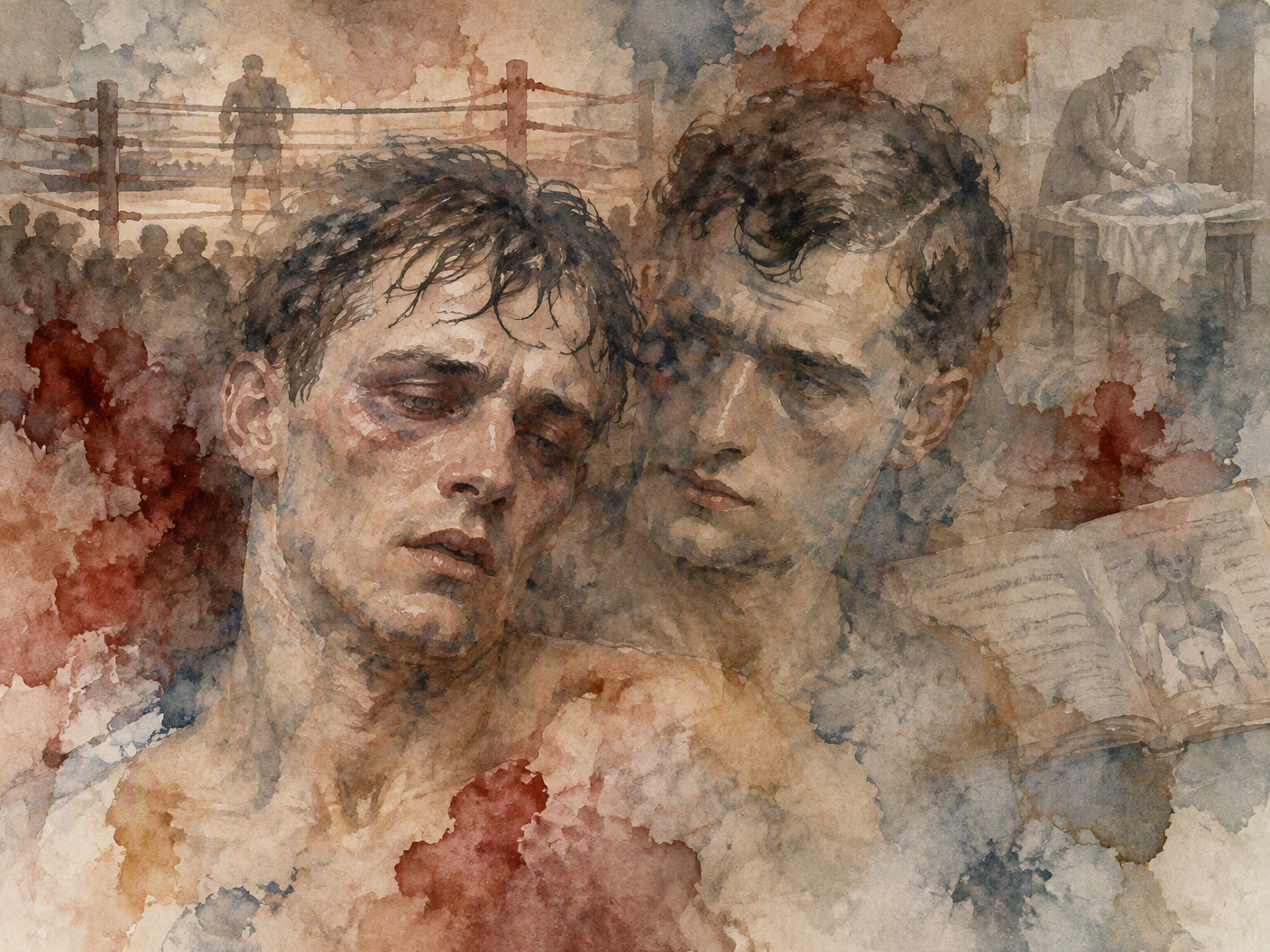
On May 24, 1913, in Calgary, Alberta, Luther McCarty entered the ring against Arthur Pelkey for a contest billed as the World White Heavyweight Championship. Before the day was over, McCarty would be dead and Pelkey would be drawn into a coroner’s inquiry. The event changed character in a few moments: a scheduled prizefight became a death investigation, and the question of what had happened to McCarty moved from the ring to the offices of Calgary’s authorities.
McCarty was the heavyweight whose name carried the contest. Pelkey stood opposite him as the challenger or opponent identified with the Calgary bout. The championship billing gave the afternoon a formal sporting purpose, but the title existed within the customs and promotional language of boxing rather than through a modern universal sanctioning system. What mattered immediately was not the wording on the bill. It was that McCarty and Pelkey were fighting, and that McCarty collapsed during the contest.
The collapse marked the first decisive break in the day. McCarty did not simply leave the contest as a defeated fighter; he went down during the bout, and the event could no longer be understood only through rounds, officiating, or the championship claim attached to it. Those present were confronted with a medical emergency inside a boxing contest. Pelkey’s role was no longer limited to that of an opponent in a scheduled match. His name became inseparable from the death that followed.
McCarty died in Calgary later on May 24. The interval between the fight and his death compressed the ordinary separation between injury, treatment, and official review. There was no long period in which the public could wait for a fighter to recover or for competing explanations to settle. The central sequence was immediate: McCarty fought Pelkey, collapsed in the ring, and died the same day. That sequence became the fixed point around which every later account was arranged.
The death required more than the conclusion that a boxer had been injured in a legal contest. Calgary authorities turned to the coroner’s process, the period’s formal means of examining a sudden death and assigning responsibility. Pelkey became the subject of that review. He was later reported to have been arrested and charged with manslaughter, a development that carried the matter beyond boxing discipline and into criminal law. The charge did not itself decide what had happened; it opened the question for official consideration.
Dr. H. S. Mosher performed the autopsy on McCarty’s body. His explanation attributed the death to a spinal haemorrhage caused by a dislocation of the neck. The finding supplied the inquiry with a physical account of how the collapse and death might be connected. It also fixed the medical language that later histories preserved: not a general description of a fatal blow, but an injury involving the neck, the spine, and haemorrhage.
That medical conclusion did not erase the legal question. Boxing matches were built around permitted violence, but the permission had boundaries defined by the rules of the contest and by the law outside it. A death inside the ring forced officials to decide whether the opponent had committed a criminal act or whether McCarty’s death resulted from the dangers inherent in the bout. Pelkey’s arrest and manslaughter charge placed that distinction at the center of the proceedings.
On May 27, three days after the fight, the coroner’s jury exonerated Pelkey. The decision supplied the official outcome of the immediate inquiry: Pelkey was not held responsible for McCarty’s death. The finding did not turn the bout back into an ordinary contest, nor did it return McCarty to his manager, Billy McCarney, or to the boxing public that had watched his career. It established instead that the criminal case against the surviving fighter would not end in a conviction.
McCarney appeared in the post-fight accounts as McCarty’s manager, one of the people left to speak about the boxer after the contest had ended. His position belonged to the practical world around prizefighting: arranging bouts, handling a fighter’s career, and confronting the consequences when the fighter did not return from the ring. The death left no room for the customary discussion of the next opponent or the next purse. McCarty’s career had ended in Calgary, while Pelkey’s future now carried the mark of an official exoneration.
The surviving account of the Calgary bout therefore rests on two linked but distinct conclusions. McCarty died on May 24 after fighting Pelkey and collapsing during the match. The coroner’s process, completed on May 27, cleared Pelkey, while Mosher’s autopsy explanation identified spinal haemorrhage from neck dislocation as the cause. The event remained in boxing history through that compact sequence: a championship billing, an in-ring collapse, a death, a manslaughter charge, and a jury’s exoneration.
Investigative Dossier & Evidence
Read the companion investigation notes, verified source claims, and primary documents.
Read the Companion Notes & Evidence Record →