
Point Shaving & Fixes · 2010s
The Betting Shift Behind Tae Hyun Bang’s UFC Fight-Fixing Conviction
Tae Hyun Bang’s November 2015 fight with Leo Kuntz became the center of a criminal case after betting moved sharply toward Kuntz before the bout. Two years later, a Seoul court sentenced Bang to 10 months in prison and found that he had accepted money to lose.
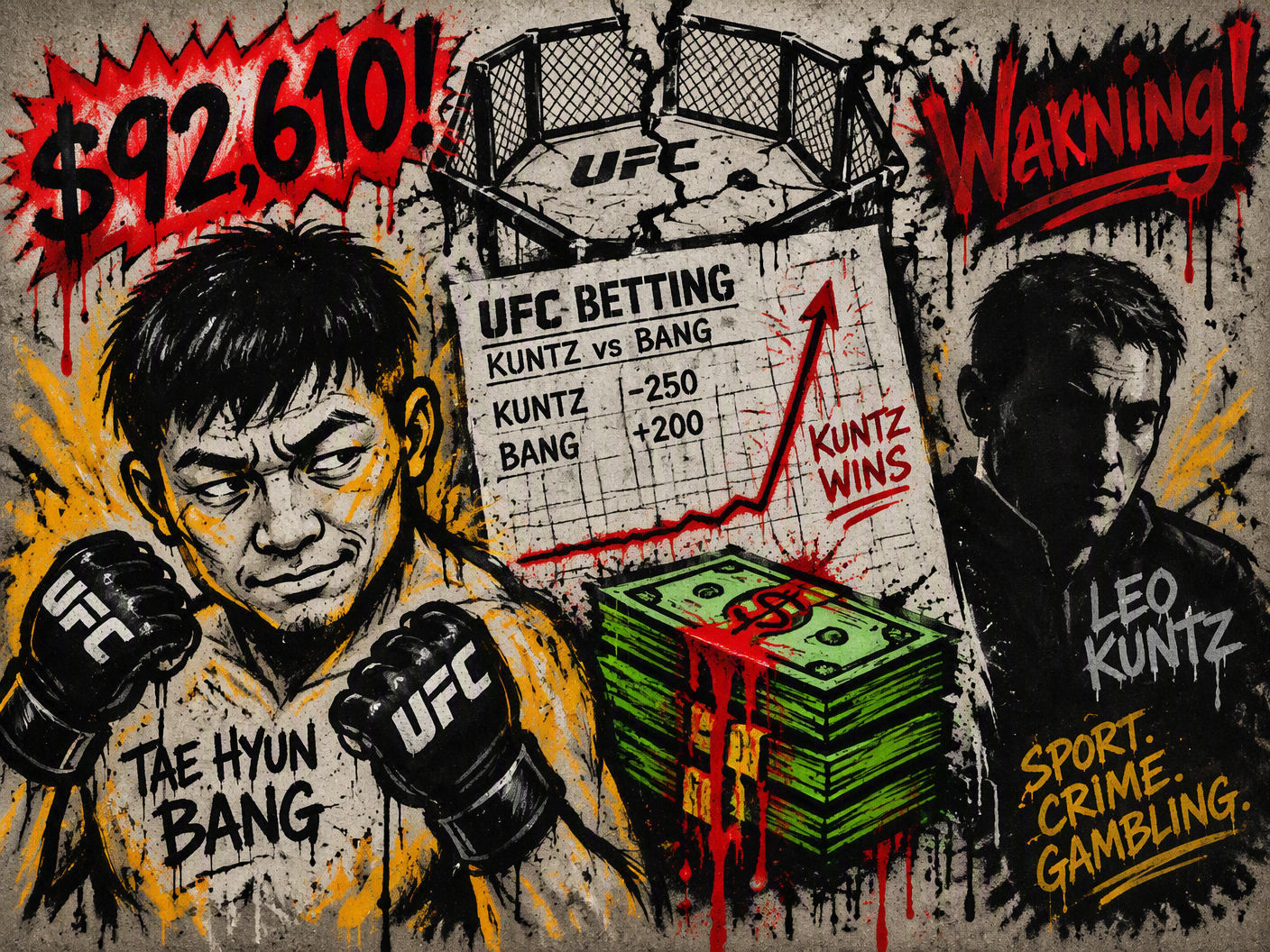
The Seoul Central District Court sentenced Tae Hyun Bang to 10 months in prison on November 24, 2017, after finding that he had taken $92,610 to throw his UFC fight against Leo Kuntz. The court’s account gave the case a precise transaction, a named opponent, and a measurable consequence. It also supplied the central contradiction: a fighter who had agreed to lose the first two rounds and the bout ultimately won by split decision. The result did not erase the arrangement. It exposed how a planned sporting outcome could be altered after the people responsible for policing the contest intervened.
The fight took place in Seoul on November 28, 2015, at UFC Fight Night 79. Bang faced Kuntz inside a regulated professional contest, with the result expected to carry the ordinary consequences of a win or loss: rankings, earnings, reputation, and future access to the UFC. Instead, the bout became the fixed point around which a wider investigation formed. Before the opening bell, betting shifted sharply in Kuntz’s favor. The movement was not treated as ordinary market preference. Its scale prompted UFC officials to warn both fighters about possible fight fixing.
The warning changed the immediate conditions of the bout. The court later said Bang had agreed to lose the first two rounds and then lose the fight, an arrangement that would have converted the contest into a controlled financial event. After UFC officials raised the possibility of fixing, Bang changed his mind. He won by split decision instead. The decision produced a legitimate-looking result on the scorecards, but the court treated the altered plan as evidence of the underlying agreement rather than as a clean break from it.
That sequence placed Bang at the intersection of two systems with different purposes. The UFC controlled the event and could warn fighters when conduct threatened the integrity of a bout. South Korean prosecutors controlled the criminal response and could pursue conduct that reached beyond a sporting violation. The warning therefore did not end the matter. It marked the point at which suspicious betting became an identified integrity problem, while the later prosecution tested whether the conduct also amounted to a crime.
The betting market had moved before the fight, not after Bang’s split-decision victory. That timing gave the irregularity its operational importance. A wager placed after a result is known is not a threat to the contest; money placed before the result can reward information about what the participants intend to do. In Bang and Kuntz’s case, the movement toward Kuntz aligned with the court’s later account that Bang had agreed to lose. The market signal came first. The criminal finding came later.
The UFC’s rules also formed part of the setting. Before an October 17 amendment to its code of conduct, the promotion had not placed restrictions on fighters and their teams betting on fights, including their own. That policy context did not determine Bang’s guilt, but it defined the environment in which betting activity could exist alongside active participation. The organization could warn fighters when a line moved drastically even as its formal code had not yet imposed the later restrictions on wagering.
The distinction between a policy violation and a criminal case mattered because the consequences came through different authorities. UFC officials could identify a threat to the bout and confront the fighters. Prosecutors could indict. A court could determine whether money had been accepted for a fixed result and impose imprisonment. In August 2017, South Korean prosecutors indicted Bang for alleged involvement in match-fixing. The allegation then entered a formal criminal process rather than remaining an internal disciplinary matter or a disputed betting story.
By the time the Seoul Central District Court acted, the case had acquired a financial center: $92,610. The court said Bang took that money to lose against Kuntz. It also found that the agreement covered both the first two rounds and the final outcome. Bang’s eventual victory did not prevent the court from treating the payment and agreement as established parts of the offense. The fight’s official result remained a split decision for Bang; the criminal judgment addressed the conduct arranged before the result.
The public case is therefore narrow but consequential. It identifies Bang, Kuntz, one UFC event in Seoul, a sharp pre-fight betting movement, an intervention by UFC officials, an indictment in South Korea, and a prison sentence. It does not turn every unusual wager into proof of corruption, nor does it map a complete betting network. The central finding rests on the court’s determination about Bang’s payment and agreement. The surrounding betting movement explains why the arrangement came under scrutiny and how the warning reached the fighters.
Bang’s sentence fixed the final institutional consequence on November 24, 2017: 10 months in prison. The UFC bout had lasted a single night, but its legal exposure continued for two years and crossed from promotion officials to prosecutors and then to a criminal court. A split-decision victory could preserve the appearance of competition. It could not remove the payment, the proposed losing plan, the betting movement, or the warning that preceded the change in conduct. The court’s sentence left those elements attached to the fight as its permanent legal afterlife.
Investigative Dossier & Evidence
Read the companion investigation notes, verified source claims, and primary documents.
Read the Companion Notes & Evidence Record →