
Tragedy · 2010s
The Cairo Stadium Crush and the Police Response That Led to Prison Sentences
A free-attendance announcement brought Zamalek supporters toward a Cairo stadium on 8 February 2015, where a fatal crowd crush followed police use of tear gas at the entrance. The deaths suspended Egyptian league football, triggered arrests of White Knights leaders, and ended in prison sentences for 14 people, including two life terms.
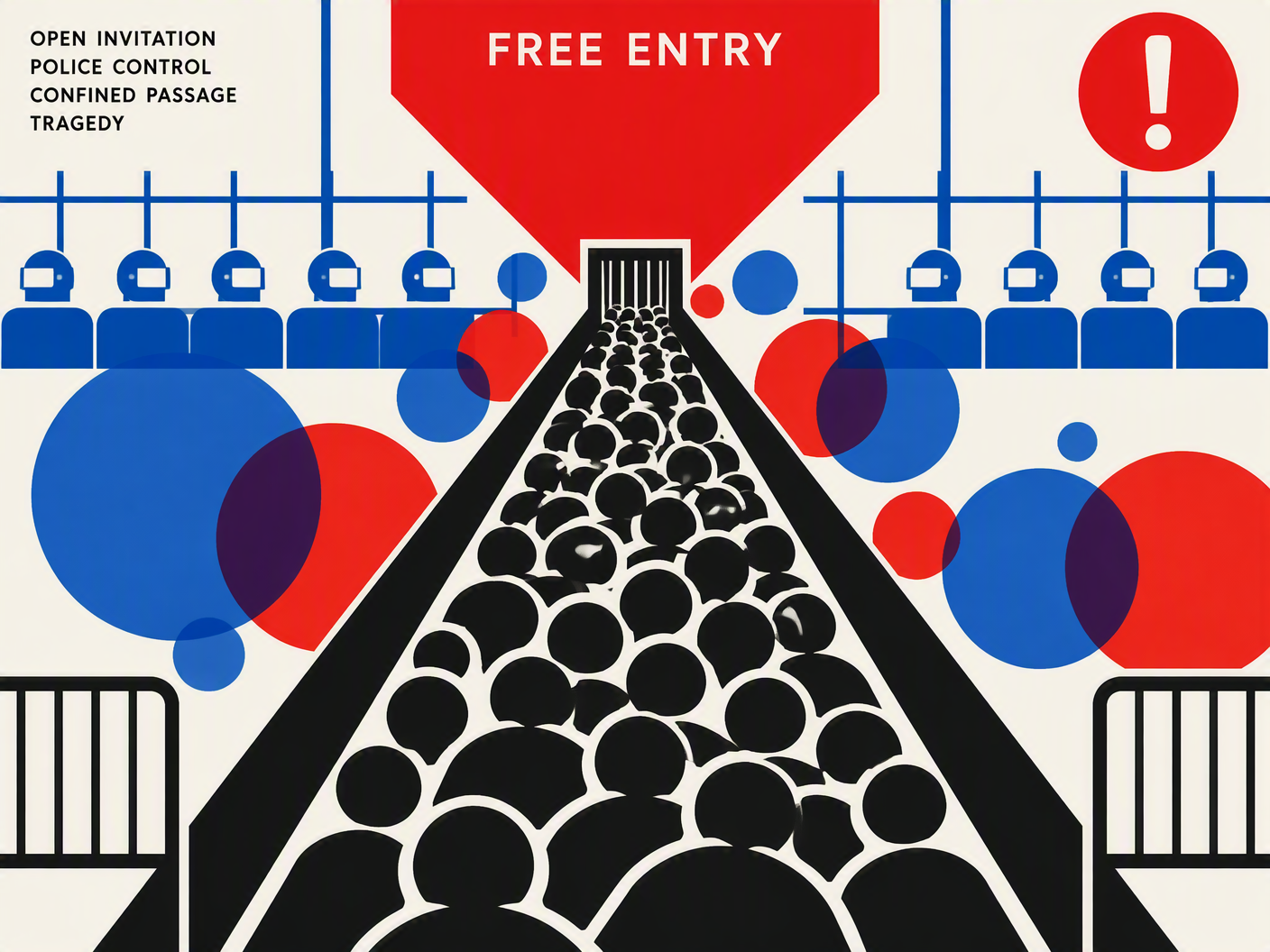
On 8 February 2015, supporters trying to enter a Cairo stadium for the Zamalek-ENPPI match were caught in a fatal crowd crush. Police fired tear gas as the fans pressed toward the entrance. The deaths transformed a football fixture into a national security crisis, then into a criminal case. Within three years, an Egyptian court would imprison 14 people connected to the stadium violence, including two defendants sentenced to life. The event began at the point where access to a match became a question of crowd control, force, and escape.
Four days earlier, Zamalek president Mortada Mansour had announced that supporters would attend the ENPPI match through free invitations. The offer removed the ordinary price barrier and placed the club’s audience at the stadium in a concentrated flow. That decision did not itself cause the deaths, but it defined the conditions under which the crowd formed. The match was no longer a normal ticketed fixture. The club had invited its supporters in, while police controlled the route by which they would enter.
At the stadium approach, the entrance narrowed the conflict to a physical passage. Fans tried to move inside. Tear gas entered the confrontation. Supporters from the White Knights group blamed police for forcing people through a narrow, fenced-in passageway before the crush occurred. Their account placed responsibility on the security decision that compressed the crowd, rather than on the behavior of the people attempting to reach the gates. That accusation became central to the public dispute over how the deaths had happened.
The tear gas mattered because it added panic and movement to a space already carrying a large number of people toward a restricted entrance. Fans attempting to enter encountered a security response instead of an open route. Bodies moved toward the same point while the police action pushed the confrontation back through the crowd. The immediate consequence was not a postponed match or a routine dispersal. People were crushed outside the venue before the football could begin.
Mansour later rejected the central accusation against the police. He said officers had not opened fire on the fans. That statement addressed gunfire, while the accounts of the incident centered on tear gas and the conditions at the entrance. The distinction did not settle responsibility. It showed how quickly the public argument divided into separate questions: what force had been used, where the crowd had been directed, and which decisions had converted an attempt to enter a stadium into a mass-casualty event.
The White Knights blamed police for the crush and described the passageway as part of the cause. Their allegation gave the disaster a deliberate structure: fans were not simply overwhelmed in an uncontrolled rush, they said, but directed into a confined route and then exposed to tear gas. That version circulated alongside broader claims that the incident had been planned. The established sequence was narrower. A crowd crush occurred, police used tear gas, and supporters assigned responsibility to the security forces for the conditions at the gate.
The state response followed immediately. On 9 February, Egyptian authorities suspended football league matches indefinitely after the deaths. The suspension removed the sport’s regular calendar from the crisis and acknowledged that the incident could not be treated as an isolated disturbance outside one stadium. A league fixture had produced a national interruption. The decision also transferred the matter from club management and stadium security to the highest levels of public authority, where the consequences reached beyond Zamalek and ENPPI.
The authorities also turned toward the White Knights leadership. The public prosecutor ordered the arrest of the group’s leaders, placing the supporters’ organization inside the criminal investigation rather than treating it only as a witness to the crowd-control failure. This decision shifted the legal focus. The police response remained part of the public controversy, but the state’s first prosecutorial move targeted the organized supporters associated with the club.
That choice carried a consequence beyond individual arrests. It recast the people who had blamed the police as potential participants in the violence. The distinction between supporter, organizer, and defendant became a matter for prosecutors and courts. The crowd at the gate had been treated as a security problem; the White Knights leadership was now treated as part of a criminal case. Meanwhile, the central physical facts remained fixed: fans had died outside the stadium, and tear gas had been used as they tried to enter.
The criminal case reached its reported conclusion on 24 September 2017. An Egyptian court sentenced 14 people to prison in connection with the stadium violence. Two defendants received life sentences. The judgment supplied a formal punishment after a disaster that had first produced competing accounts of crowd movement, police force, and supporter responsibility. It also gave the event a legal afterlife: the stadium entrance was no longer only the site of deaths and public accusation, but the starting point of convictions and long prison terms.
The court outcome did not erase the conflict over the entrance. Supporters had blamed police for the passageway and tear gas. Mansour had denied that police opened fire. The authorities had suspended league football and ordered arrests of White Knights leaders. Those decisions created separate lines of accountability rather than one uncontested explanation. The public consequences were measurable: deaths, an indefinite league suspension, arrests, and sentences imposed on 14 people, with two life terms among them.
The Cairo incident therefore moved through three forms of authority. The club first shaped attendance through free invitations. Police controlled the entrance with tear gas. Prosecutors and judges later determined who would bear criminal punishment. Between those stages stood the crowd crush, the deaths, and a dispute over whether confinement and force had made the danger unavoidable. The final judgment established prison consequences for 14 defendants, but the public argument remained anchored to the same unanswered operational question: how the route into a football match became the place where people died.
Investigative Dossier & Evidence
Read the companion investigation notes, verified source claims, and primary documents.
Read the Companion Notes & Evidence Record →