
Doping & Drugs · 2020s
The 2021 Chinese Swimmers’ Trimetazidine Positives and WADA’s Contamination Decision
Between 1 and 3 January 2021, CHINADA collected 60 urine samples at a Chinese national swimming meet; later analysis produced 28 adverse analytical findings for trimetazidine among 23 swimmers. The case entered public view through April 2024 reporting, after WADA said it could not disprove CHINADA’s contamination explanation; a later independent review found no evidence of favoritism or interference.
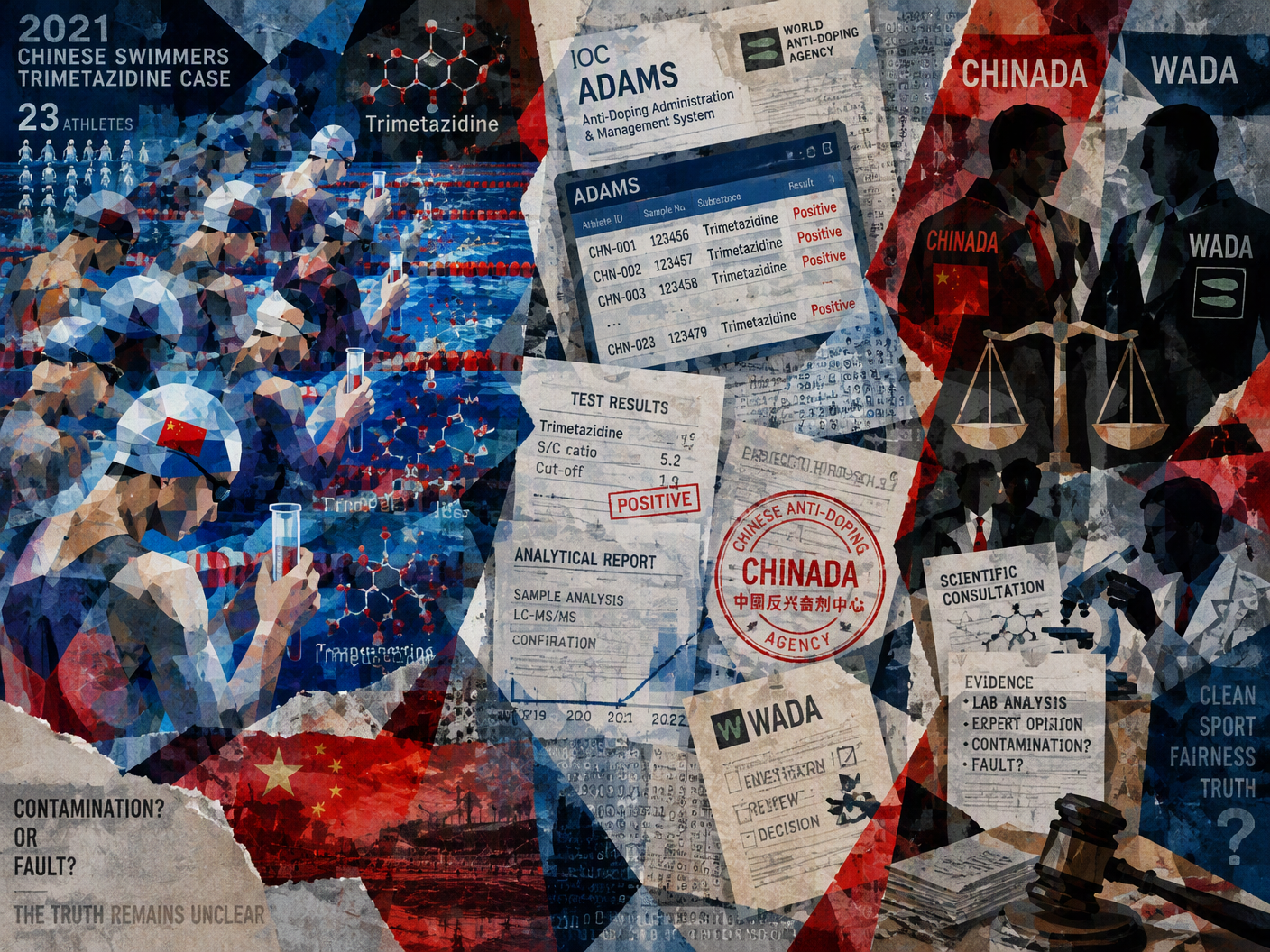
Between 1 and 3 January 2021, CHINADA collected 60 urine samples at a Chinese national swimming meet. Later analysis produced 28 adverse analytical findings for trimetazidine among 23 different swimmers. The substance, also known as TMZ, is prohibited in competition because it can affect energy metabolism and blood flow. The samples did not immediately produce a public case, suspension, or hearing. Instead, they entered an administrative process that would eventually turn on a narrower question: whether the drug reached the athletes through deliberate use or contamination.
The samples moved through a system disrupted by the COVID-19 pandemic. On 15 March 2021, the results were entered into ADAMS, the World Anti-Doping Agency’s global database. By then, CHINADA had possession of the findings and responsibility for deciding how to investigate them. Twenty-eight findings attached to 23 swimmers created an unusual concentration of positives from one meet. The number did not itself determine the cause. It established the scale of the administrative problem and placed the Chinese agency in the position of investigating its own national testing episode.
In April, CHINADA informed WADA that it had opened an investigation into the source of the trimetazidine. Public health authorities were involved. That decision placed the case inside a national process before it reached an international one. CHINADA was not merely transmitting laboratory results; it was examining whether the samples had been exposed to TMZ through a common source. The distinction mattered because the eventual outcome would determine whether the swimmers faced sanctions or were treated as athletes whose samples had been compromised without their knowledge.
By June, WADA said CHINADA had accepted contamination as the explanation for the findings. The Chinese agency did not pursue the positives as intentional doping cases. WADA reviewed the decision rather than overturning it. Under the process WADA later described, the swimmers were treated as having no fault or negligence in the circumstances examined. The administrative conclusion therefore separated the laboratory result from personal culpability: the samples contained evidence of a prohibited substance, while the agencies accepted that the swimmers had not deliberately placed it there.
WADA’s position rested on its inability to disprove contamination. That phrase became the central hinge of the case. It did not mean the agency had reconstructed every movement of the drug from source to sample. It meant that, after reviewing the material available to it, WADA concluded the contamination explanation could not be rejected. The agency treated that conclusion as sufficient to refrain from challenging CHINADA’s handling and to accept the resulting no-fault outcome for the swimmers.
WADA said its review included unpublished scientific information and consultations with independent scientific experts. Those experts examined the contamination explanation within the information WADA had obtained. The agency also sought outside legal advice before deciding not to appeal or otherwise reverse CHINADA’s conclusion. This was not a criminal prosecution and did not produce a courtroom verdict. It was an anti-doping review governed by agency rules, laboratory findings, scientific interpretation, and the legal judgment of officials deciding whether the case could support further action.
The review also had a physical limitation. WADA said its investigators could not travel to China because of COVID-19 restrictions. They could evaluate the case materials and consult specialists, but they did not conduct an on-site investigation in the country where the samples were collected and where CHINADA had pursued its inquiry. That constraint did not settle the scientific question. It shaped the scope of WADA’s examination and became part of the later dispute over whether the agency had done enough before accepting the contamination explanation.
For more than three years, the matter remained inside the anti-doping system. On 20 April 2024, The New York Times reported that WADA had confirmed the early-2021 trimetazidine findings involving 23 Chinese swimmers; ABC News followed with its report on 22 April. The public dispute then centered on the agencies’ judgment, the limits imposed by the pandemic, and whether the same result would have been accepted from athletes in another country. The issue was no longer only what appeared in the samples, but how officials had decided what those results meant.
The controversy generated a second review. Swiss prosecutor Eric Cottier examined WADA’s handling of the case and issued an interim report on 9 July 2024. He found no evidence that WADA had shown favoritism or interfered in the matter. His conclusion did not convert the contamination explanation into a laboratory reconstruction, nor did it establish intentional doping by the swimmers. It addressed a different institutional question: whether WADA’s officials had improperly protected the athletes or manipulated the process. Cottier found no evidence that they had.
The case therefore ended with two conclusions operating at different levels. The laboratory findings established the presence of trimetazidine in samples from 23 swimmers. CHINADA treated the episode as contamination, and WADA said the available information did not allow it to disprove that account. The resulting administrative judgment assigned the swimmers no fault or negligence. Cottier’s review then found no evidence of favoritism or interference by WADA. The central exposure was not a proven conspiracy or an established doping scheme, but the authority agencies exercised when positive tests met an explanation they accepted without imposing sanctions.
Investigative Dossier & Evidence
Read the companion investigation notes, verified source claims, and primary documents.
Read the Companion Notes & Evidence Record →