
Point Shaving & Fixes ·
How Betting Records Led to Charges—and Fallon’s British Exclusion
In July 2006, an inquiry covering more than 80 races brought conspiracy charges against Kieren Fallon and others, who denied wrongdoing. Britain’s racing regulator then stopped him riding in Great Britain.
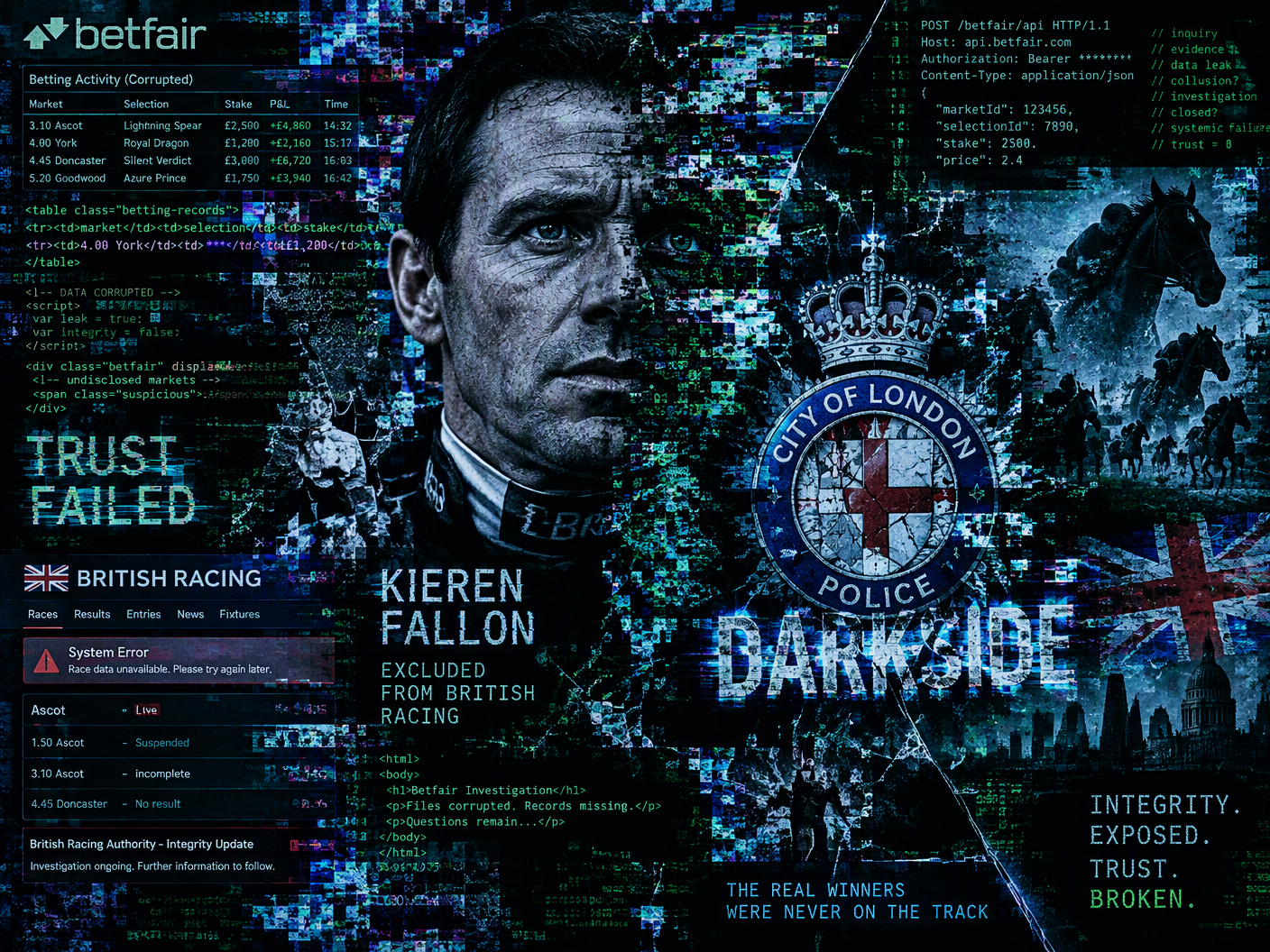
On July 3, 2006, the day after winning the Irish Derby at the Curragh, Kieren Fallon arrived at Bishopsgate police station in London. The six-time British champion jockey, then 41, entered without speaking to waiting reporters and left about 20 minutes later in a silver Mercedes. He had been charged with conspiracy to defraud customers of the online betting exchange Betfair.
The investigation had begun with betting records. After noticing certain betting patterns, Betfair made its records available to the Jockey Club, which involved the City of London Police. The resulting inquiry, Operation Crypton, examined more than 80 races run between December 2002 and September 2004. More than 130 officers worked on the case; the first arrests were made in September 2004.
The conspiracy charge alleged that Fallon, fellow jockeys Fergal Lynch and Darren Williams, former racing syndicate director Miles Rodgers and two other men had agreed that horses ridden by the three jockeys would not run on their merits, with riding practices used if necessary to affect the results, and that the horses would then be laid to lose. These were allegations, not findings that races had been fixed.
All those charged denied wrongdoing. Fallon, Rodgers and the others were released on bail and were due to appear at City of London Magistrates’ Court on July 17.
The immediate consequence for Fallon came outside the courtroom. The Horseracing Regulatory Authority provisionally stopped him riding in Britain pending a special hearing on July 7. Because Fallon held an Irish licence, he could continue riding in Ireland. Denis Egan, chief executive of the Irish Turf Club, said its licensing committee would note what had happened, but added: “As far as we are concerned Kieren Fallon is innocent until proven guilty.”
At the July 7 hearing, Fallon’s representatives asked the HRA panel to examine the case against him and conclude that it could not succeed. The panel declined, saying that assessing guilt or innocence was not its task. It acknowledged that exclusion would be highly detrimental to Fallon, then at the height of his career, and that it could cause significant financial damage to him and others. Lynch and Williams, both freelance jockeys, faced the loss of their main means of earning a living.
The panel nevertheless weighed that hardship against the damage it believed could be done to racing’s integrity and public confidence if jockeys facing such charges continued to ride before trial. It prohibited Fallon from riding in Great Britain until the trial concluded or a further order was made, and refused new licences to Lynch and Williams on the same basis. Fallon remained free to ride abroad.