
Scandals & Feuds ·
The Sandpaper Attempt at Newlands
Cricket Australia found that David Warner developed the ball-tampering plan and instructed Cameron Bancroft to carry it out, while Steve Smith knew of it and failed to intervene. All three were banned, though the umpires found no resulting change to the ball.
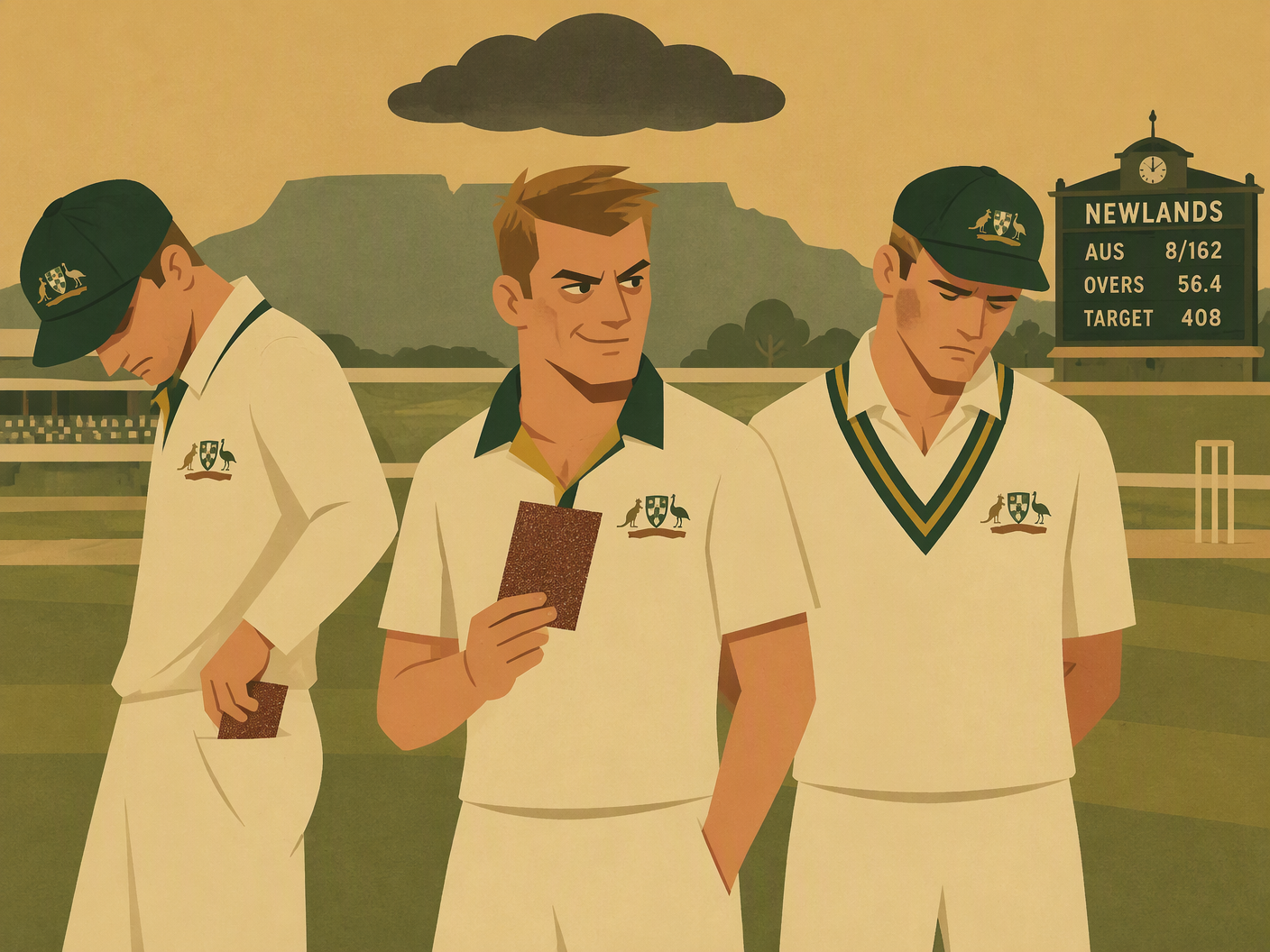
During South Africa’s innings in the third Test at Newlands in March 2018, Cameron Bancroft rubbed the ball while holding a foreign object. Television cameras captured him concealing it, first in his pocket and then inside his trousers. What Cricket Australia later identified as sandpaper had been brought onto the field as part of a plan to alter the ball’s condition. Its investigation would distinguish the player carrying out the attempt from the two senior players who developed it or failed to stop it.
When the incident appeared on the ground’s big screen, the two on-field umpires questioned Bancroft in the presence of Australia captain Steve Smith. Bancroft showed them a piece of cloth rather than the sandpaper. The umpires inspected the ball but found no marks showing that his actions had changed its condition. They neither replaced it nor awarded South Africa five penalty runs. Bancroft was nevertheless charged because the officials judged that his actions were likely to alter the ball.
After play, Bancroft and Smith faced reporters. Bancroft said he had used sticky yellow tape, an account contradicted by Cricket Australia’s subsequent finding that the material was sandpaper. Smith said the plan had been made during the lunch break on the third day, without the coaching staff’s consent. Cricket Australia later said its investigation found that only Smith, vice-captain David Warner and Bancroft among the touring players and support staff had known of it.
The sanctions announced on March 28 rested on distinct findings about each man’s conduct. Cricket Australia found Warner responsible for developing the plan and instructing Bancroft to carry it out. It also charged him with showing Bancroft how to tamper with the ball, concealing his involvement from match officials and failing to report it voluntarily.
Smith’s ban was based on knowing about the plan and failing to prevent it. The investigation also found that he directed the concealment of evidence on the field and misled match officials and the public about the attempt and its participants. Bancroft, the most junior member of the playing eleven, was charged with participating in the plan, following Warner’s instructions, concealing the evidence at Smith’s direction and misleading officials and the public.
Cricket Australia banned Smith and Warner for 12 months each and Bancroft for nine months from international cricket and domestic cricket in Australia. All three were ordered home and required to undertake 100 hours of voluntary service in community cricket. Warner would not be considered for another team leadership position; Smith and Bancroft would have to wait at least 12 months after their suspensions ended before being considered.
The bans did not exclude club cricket. Cricket Australia encouraged the three to play at that level to reconnect with the cricket community. At the Saturday-night press conference, before the investigation had set out their separate responsibilities, Smith had offered a simpler admission: “I am embarrassed to be sitting here talking about this.”