
Point Shaving & Fixes · 2000s
Rick Tocchet, Operation Slapshot, and the Gambling Case That Returned Him to the NHL
As a Phoenix Coyotes assistant coach, Rick Tocchet became a public subject of New Jersey’s Operation Slapshot gambling investigation. He later pleaded guilty to conspiracy and promoting gambling, received probation without jail time, and eventually returned to NHL coaching—while the league maintained that the conduct did not involve betting on hockey.
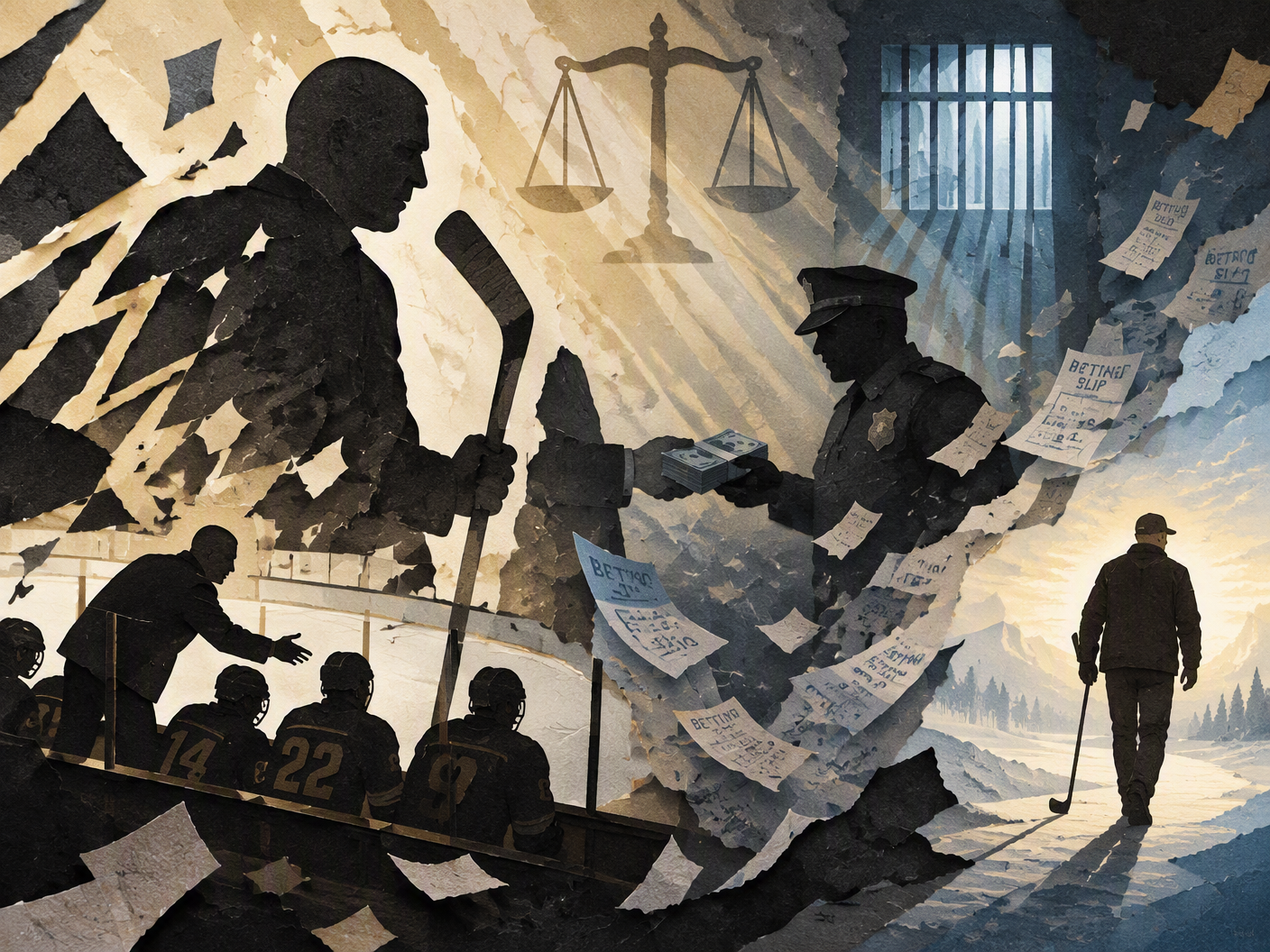
In February 2006, Rick Tocchet’s work changed from the Phoenix Coyotes bench to the offices of New Jersey authorities. He had been an assistant coach in the National Hockey League, a job built around travel, access, and the public trust attached to professional competition. Then Operation Slapshot became public, and Tocchet was identified as a subject of an undercover New Jersey State Police investigation into an illegal gambling ring. He was expected to face authorities in a case that moved quickly from private betting activity into the visible life of a major sports institution.
The numbers gave the investigation a scale that reached beyond an isolated wager: more than 1,000 bets, totaling more than $1.7 million, placed across roughly 40 days. The money moved through a network that authorities said linked Tocchet with James Harney, a New Jersey state trooper. Harney’s occupation mattered because it placed public authority inside the same arrangement under investigation. A state employee who carried the power of the law was accused of helping operate a gambling business, while Tocchet occupied a different kind of trusted position on the other side of the sports economy.
New Jersey authorities identified charges involving promoting gambling, conspiracy, and money laundering. Tocchet was not being investigated as a spectator who had made a careless wager from a kitchen table. His name entered the case because officials placed him within an operation that handled bets at volume, with partners, money, and an organized process. The distinction changed how the NHL had to respond. Gambling was not simply a private vice when an employee of the league appeared in a criminal investigation involving a state trooper and a seven-figure betting total.
Gary Bettman, the NHL commissioner, requested a face-to-face meeting with Tocchet, and the league opened an internal investigation. The response placed two systems beside each other: New Jersey’s criminal process, which could bring charges and seek punishment, and the league’s private employment structure, which could protect its competition by deciding what conduct threatened public confidence. Tocchet’s position as a coach made the question immediate. He was not skating in a game, but his daily work still belonged to an institution whose value depended on the appearance that its contests were insulated from betting interests.
Wayne Gretzky, then the Coyotes’ coach and a part-owner of the team, was pulled into the public pressure through his wife, whose alleged involvement became part of the attention surrounding the case. Gretzky said he was not involved. The episode reached beyond Tocchet’s employment because professional sports distribute consequence through families, ownership structures, and public identity. A gambling investigation that began in New Jersey now touched the Phoenix bench, the team’s ownership, the commissioner’s office, and the private lives attached to a franchise.
Harney’s case supplied the first major courtroom consequence. The former state trooper pleaded guilty to conspiracy, promoting gambling, and official misconduct. He was later sentenced to prison by Judge Thomas S. Smith in Mount Holly, New Jersey, on August 3, 2007. Harney’s plea converted the investigation from an accusation surrounding sports figures into a criminal proceeding with an admitted participant and a prison sentence. The costs were no longer confined to reputation or employment. They reached the courthouse, the state payroll, and the prison system.
Tocchet’s legal turning point came on May 25, 2007. In New Jersey, he pleaded guilty to conspiracy and promoting gambling. The plea resolved his criminal case without a trial and gave the offense a defined legal shape: gambling-related conduct, not a conviction for wagering on a hockey game. The difference was central to the NHL’s public position. The league said Tocchet’s conduct did not involve betting on hockey, separating the integrity of a particular contest from the broader prohibition against operating or promoting illegal gambling.
The punishment also differed sharply from Harney’s. Tocchet received two years of probation and did not serve jail time. Probation placed conditions on his life without removing him from it; he remained outside prison while the case continued to define his professional future. He completed the probation in 2008. That outcome left the league with a difficult institutional calculation. The criminal court had imposed a noncustodial sentence, but the NHL still had to decide whether a coach connected to an illegal gambling operation could remain employable in a sport that treated betting as a threat to its legitimacy.
The case’s public meaning expanded in the years that followed because sports employers rarely treat criminal punishment as the only measure of a person’s professional value. Teams weigh skill, experience, public attention, and the cost of reopening an old scandal. For Tocchet, the plea and probation became part of a career that did not end at the courthouse. The same sport that had confronted his conduct through a commissioner’s meeting and an internal investigation eventually permitted a return to coaching, carrying the old case forward rather than erasing it.
On May 14, 2025, the Philadelphia Flyers hired Tocchet as head coach. The appointment placed him once again inside the NHL’s most visible working spaces: the bench, the press conference, the travel schedule, and the employment hierarchy that governs professional hockey. Nearly two decades after Operation Slapshot became public, the legal consequences had been completed, but the institutional afterlife remained visible. A probation sentence had ended; a coaching career had resumed; the question of what professional rehabilitation means was left to the team that chose to employ him.
Tocchet’s case therefore carried two separate boundaries. He pleaded guilty to conspiracy and promoting gambling, and the court placed him on probation. At the same time, the NHL’s stated distinction—that his conduct did not involve betting on hockey—kept the case outside the narrower allegation that he had fixed or wagered on the outcome of NHL games. That distinction shaped the consequences he carried: criminal liability, league scrutiny, and a damaged public position, followed by continued access to the profession. The offense remained serious without becoming a different offense.
For Tocchet, the long consequence was not a single day of punishment but a career divided by the New Jersey case. Before February 2006, he was a coach working within the Coyotes organization. After the investigation, his name was tied to a gambling operation involving more than 1,000 wagers and $1.7 million. He pleaded guilty, served probation instead of jail, and returned to an NHL bench. In Philadelphia, the old case followed him into a new job—not as a settled slogan about sports, but as a documented part of the employment history he and the league continued to carry.
Investigative Dossier & Evidence
Read the companion investigation notes, verified source claims, and primary documents.
Read the Companion Notes & Evidence Record →