
Violence & Brawls ·
A Football Dispute, Then a Fatal Mob Attack in Maranhão
Police said a referee stabbed a player after an expulsion during a June 2013 match. The state Public Safety Department said the player’s friends and relatives then killed the referee.
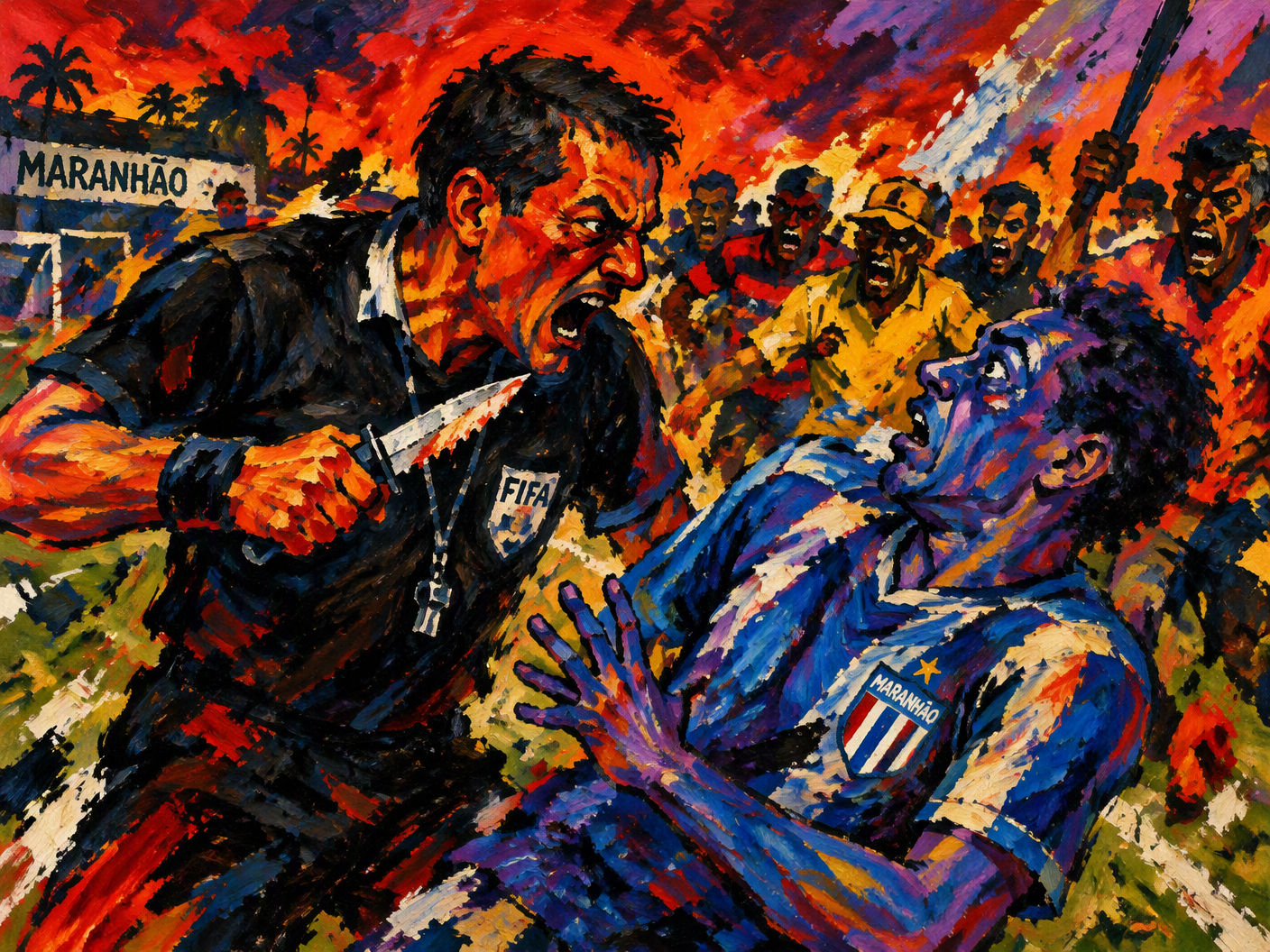
On June 30, 2013, a dispute over a player’s expulsion from a local football match in Maranhão, Brazil, ended in two deaths. Police said referee Otávio da Silva stabbed player Josenir Abreu after a physical confrontation. Abreu died, and people rushed onto the field and killed the referee.
The match took place in Centro do Meio, a settlement near Pio XII. According to the police account reported by G1, the player argued with the referee after being sent off and was stabbed in the chest. A statement from Maranhão’s Public Safety Department, reported by the Associated Press, described a fistfight before Silva drew a knife. Abreu did not survive the stabbing.
The violence then spread beyond the two men. The department said Abreu’s friends and relatives rushed onto the field, stoned the referee to death and dismembered his body. G1 reported that relatives and other people present attacked Silva with stones and severed his limbs.
Investigators had witness accounts and cellphone recordings. In a statement reported by G1 on July 1, the Public Safety Department said Valter Costa, head of the regional police station in Santa Inês, had obtained footage that could help identify people involved in the attack on the referee.
Costa said witnesses had already identified some people who were at the scene. By July 6, the Associated Press reported that police had arrested one suspect.
The player’s death preceded the attack on the referee; it did not excuse it. Costa said police would identify and hold accountable everyone involved, adding that one crime could never justify another.