
Tragedy ·
Bee Scottland’s Last Fight Aboard the Intrepid
The Maryland boxer died six days after George Khalid Jones knocked him out in a televised 2001 bout. Jones later described how the aftermath changed his view of stopping a fight.
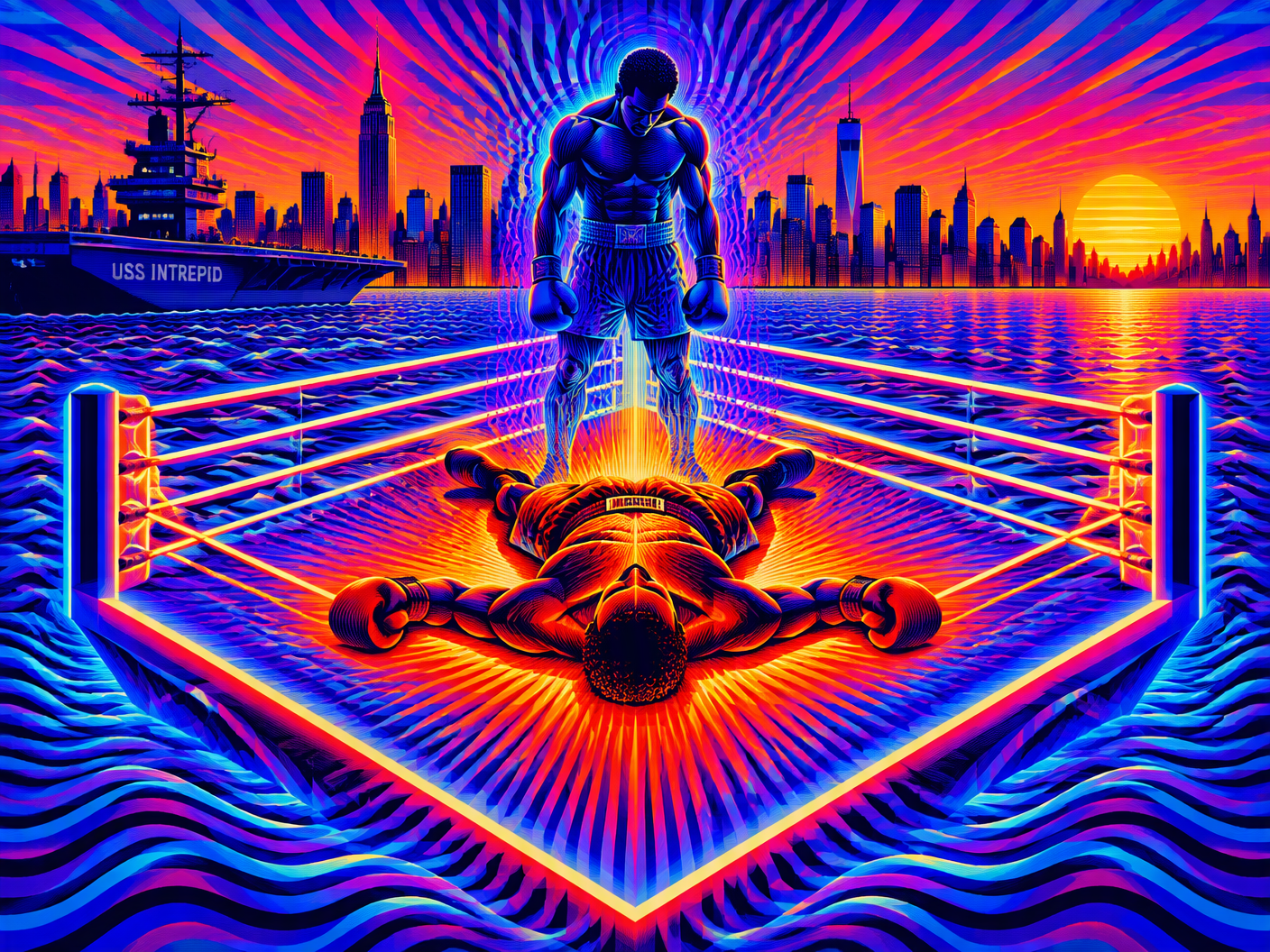
In the tenth and final round aboard the USS Intrepid on June 26, 2001, George Khalid Jones knocked Beethavean “Bee” Scottland to the canvas. Jones later recalled celebrating before someone told him to stop: his opponent was not getting up. Paramedics carried Scottland from the ring on a stretcher. The 26-year-old boxer entered a coma and died six days later, leaving a wife and three small children.
The light-heavyweight bout was part of a six-fight evening televised on ESPN2 from the retired aircraft carrier’s flight deck. More than 2,000 spectators attended. The setting had been promoted for its television appeal: the Manhattan skyline on one side, the sunset over the Hudson River on the other. Scottland, from North Brentwood, Maryland, had accepted the fight on four days’ notice after David Telesco withdrew with a training injury.
Scottland’s longtime trainer, Derek Matthews, recalled opposing the match. “I pleaded with him not to take that fight,” he told writer Elliot Worsell in a retrospective published in 2026. Matthews considered Jones too big and too strong for Scottland. He said the prospect of a world-title opportunity—and a payday large enough to support Scottland’s family—had helped make the bout attractive.
Scottland had offered resistance. Jones, from Paterson, New Jersey, remembered being hurt in the eighth round. “When I went back to the corner, I was like, ‘Man, I don’t know if I’ve got it,’” he told Worsell. Jones said he fought more cautiously in the ninth. In the tenth, according to the Associated Press’s contemporary account, a left staggered Scottland and a right sent him down.
At Bellevue Hospital, Scottland’s head injuries left him in very critical condition, a hospital spokeswoman told the AP. He was scheduled for several hours of brain surgery on June 27. The televised knockout was also seen by David Snider, a freelance journalist who had spent two weeks interviewing Scottland in 1997. ABC News reported that Snider happened upon the fight while changing channels and was horrified by the punishment Scottland was taking.
In footage shown on Nightline in July 2001, Scottland had spoken plainly about the dangers of his work. “It’s known that people die in the ring. But that’s a chance I take,” he said in the 1997 interview. “You’ve got a family you got to take care of financially, that’s your job.” Snider remembered a young man who talked openly about boxing’s risks and his dedication to his wife and children.
For Jones, the aftermath changed how he understood stopping a fight. He told Worsell that, before Scottland’s death, he would have resented an early stoppage—even if he had been the boxer taking the punishment. His position afterward was different. “If I’m a trainer today, I’m stopping fights too early rather than too late,” he said. “I don’t care if the guy gets mad at me.”