
Scandals & Feuds ·
After IBA Disqualifications, Two Boxers Competed in Paris
Imane Khelif and Lin Yu-ting competed at the 2024 Olympics amid conflicting accounts of their 2023 exclusions, due process and confidential eligibility tests.
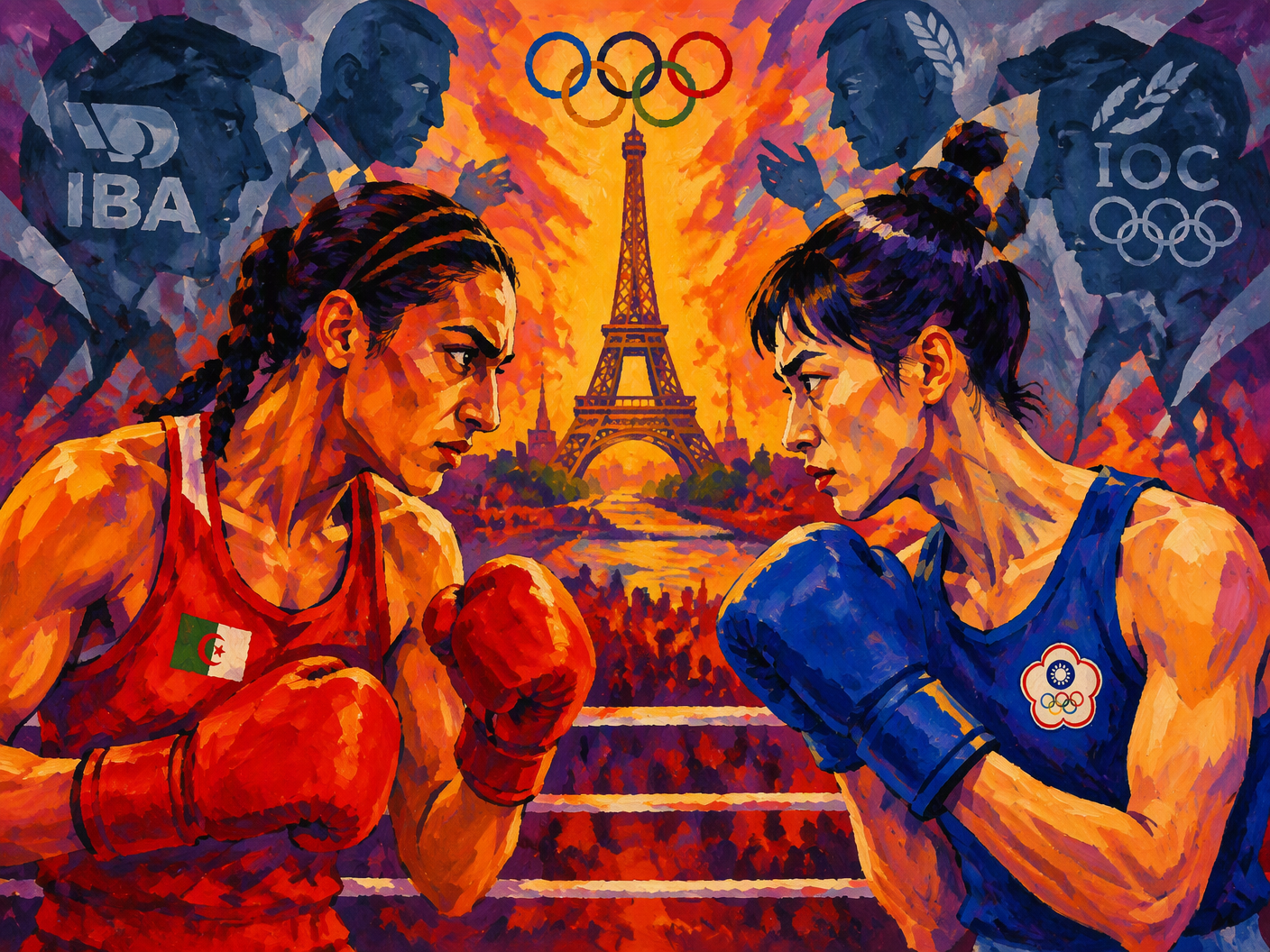
At the 2024 Paris Olympics, Imane Khelif of Algeria and Lin Yu-ting of Taiwan were allowed to compete in women’s boxing despite having been disqualified from the International Boxing Association’s world championships the previous year. The IBA defended its exclusions; the International Olympic Committee and the Paris 2024 Boxing Unit defended the athletes’ eligibility. Behind those opposing decisions lay a dispute about confidential tests and how the exclusions had been made.
The disagreement drew intense attention after Khelif’s 46-second victory over Italy’s Angela Carini. Carini abandoned their bout on Aug. 1, 2024. The IBA demanded the removal of both Khelif and Lin from Olympic competition, while the IOC stood by their inclusion. The brief bout brought the earlier decision back into public view, but did not establish the medical claims at the center of the dispute.
On March 24, 2023, the IBA disqualified both athletes from its women’s world championships in New Delhi. It said they had failed to meet its eligibility criteria, basing the decision on tests conducted at the 2022 championships in Istanbul and again in New Delhi in 2023. Khelif was excluded before her gold-medal bout; Lin was stripped of her bronze medal.
The IBA expressly said the athletes had not undergone a testosterone examination. Instead, it described a “separate and recognized test,” whose specifics remained confidential. It asserted that the results showed both athletes were ineligible and had competitive advantages over other women. Those were the association’s claims; its statement did not disclose the details needed to assess what the test results meant.
The institutions also offered conflicting accounts of the procedure. In a joint statement during the Paris Games, the IOC and the Paris 2024 Boxing Unit called the athletes victims of a “sudden and arbitrary decision.” They said the two had been disqualified near the end of the 2023 championships “without any due process.”
The IBA, by contrast, said its committees had reviewed and endorsed the decision. In a fuller account, it said the athletes had consented to testing, received copies of their results and been told they could appeal to the Court of Arbitration for Sport. It also said both had signed papers acknowledging notice of their exclusion. That account disputed the IOC’s description of the process; it did not make the confidential test details public.
The Olympic competition operated under a different authority. After withdrawing recognition of the IBA in 2023, the IOC relied on the Paris 2024 Boxing Unit to set Olympic eligibility standards. IOC spokesman Mark Adams said everyone competing in the women’s category complied with those criteria.
The IOC and the Boxing Unit also pointed to the athletes’ years of competition in the women’s category, including at the Tokyo Olympics, IBA world championships and IBA-sanctioned tournaments. As their eligibility became a public argument in Paris, Adams’s defense was direct: “They are women in their passports and it’s stated that is the case, and they are female.”