
Violence & Brawls · 1980s
The Whistle at Tourbillon: Four Wettingen Players and Referee Bruno Klötzli
On 7 October 1989, a stoppage-time equalizer at Tourbillon ended with referee Bruno Klötzli pursued and attacked after he blew for full time. Swiss football authorities later suspended and fined the four Wettingen players identified in the disciplinary proceedings; Klötzli left refereeing after the incident.
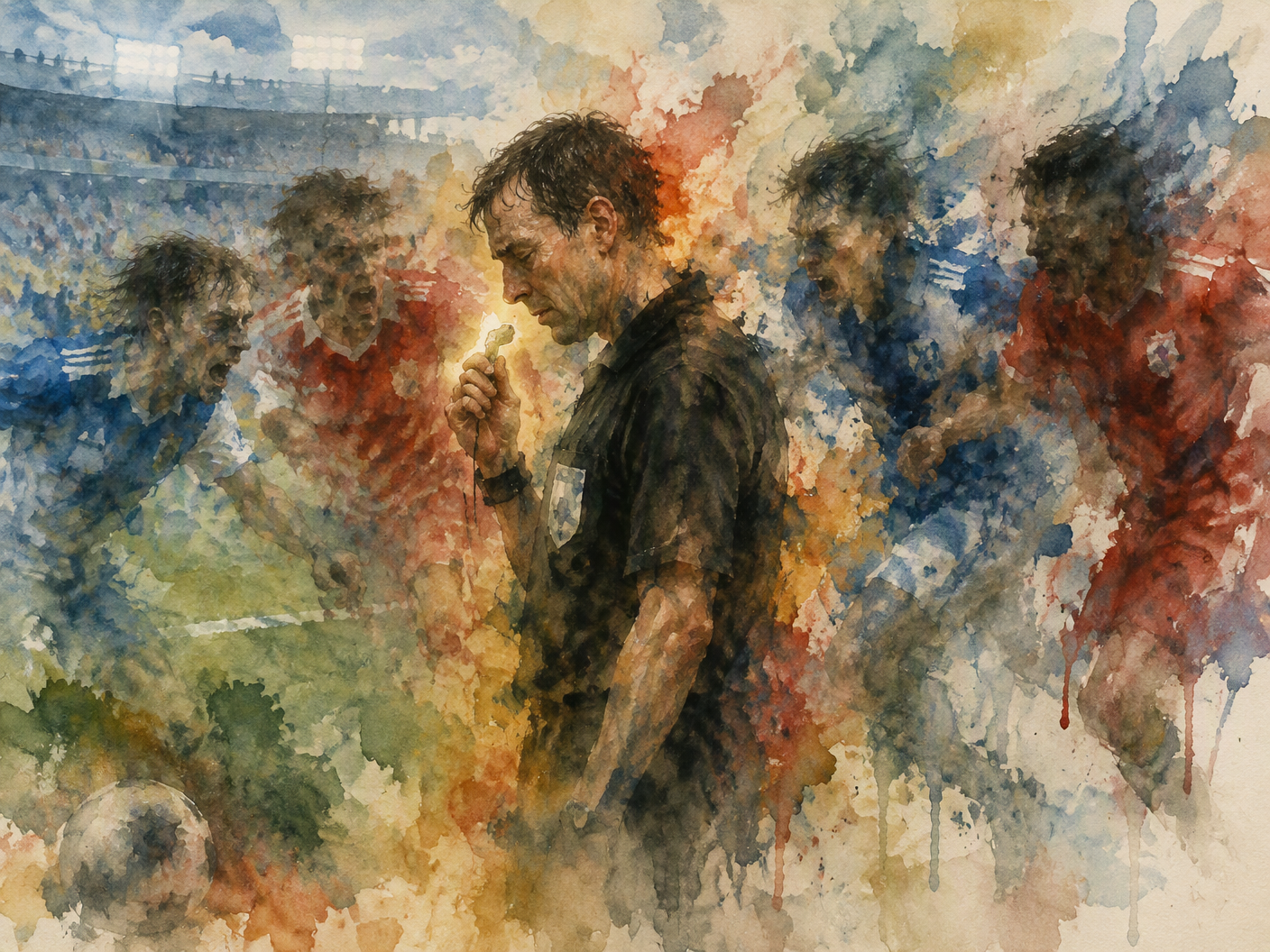
Bruno Klötzli blew the whistle while the ball was about to cross the goal line. The match at Tourbillon in Sion was finished, but the move was not. FC Wettingen had drawn level with FC Sion in stoppage time, making it 1–1, and the referee's decision cut across the final action. Four Wettingen players pursued Klötzli after the whistle and attacked him. The score was settled on the field. The argument continued with the official at its center.
It was 7 October 1989, a Nationalliga A match in Sion, and the last seconds carried the weight of a result. Jean-Paul Brigger had taken the free kick that began the sequence. Martin Rueda finished the move that produced Wettingen's equalizer. Then Klötzli ended the match as the ball approached the line. In football, the order of those acts mattered. A goal could change the table. A whistle could decide whether the goal existed at all.
The four Wettingen players later identified in the disciplinary proceedings were Alex Germann, Martin Frei, Reto Baumgartner, and Roger Kundert. They did not walk away when play ended. They went after Klötzli. The surviving descriptions differ in the small mechanics of the encounter, but not in its central fact: the referee was pursued and physically attacked after he had blown for full time. The confrontation belonged to the match, but it was no longer part of the match.
Klötzli had made the call at the edge of the goal. The players answered it with their bodies. That sequence gave the incident its shape and its consequence. The disputed question was not whether Wettingen had created a scoring chance; it had. The question was whether the whistle had ended the action before the ball crossed. Klötzli's judgment settled the official result. The pursuit that followed gave Swiss football authorities a second matter to settle.
The Swiss football authorities reviewed the referee's report and the available video before imposing discipline. Their response came through football's own governing process: suspensions and fines for the four players. Alex Germann received the heaviest punishment, a one-year suspension and a fine of CHF 20,000. The amount put a number on the conduct. The suspension took away a full season of his working life as a professional footballer.
Martin Frei's suspension was increased from six months to eight. Reto Baumgartner's rose from seven months to ten. Roger Kundert received four months. The different terms showed how the authorities distributed responsibility among the four men, even though the central finding was shared: each had been involved in the post-whistle attack on Klötzli. Appeals did not erase the punishments. They intensified two of them.
For Wettingen, the affair moved from the last play at Tourbillon into the offices where reports were read, video was reviewed, and penalties were fixed. Germann faced the longest suspension and the largest fine. Frei and Baumgartner saw their terms increased. Kundert's four-month ban remained the mark attached to his part in the incident. No criminal court verdict against the four players forms part of the documented outcome. The punishment came from football authorities.
Klötzli's consequence was different. The players lost months of their careers. He left refereeing after the incident. The man who had controlled the final seconds at Tourbillon no longer stood in the middle of matches. There was no second whistle to restore the old arrangement, no later appointment to put him back on the field. His refereeing career ended in the wake of the attack.
The later chapter in Klötzli's life belonged to another case. In 1999, he received a conditional prison sentence of eighteen months for forgery and abuse of confidence. Those offenses were separate from the 1989 match and from the attack by the Wettingen players. The dates sit in the same biography, but they do not make one event explain the other. Tourbillon ended his work as a referee. The 1999 sentence concerned different conduct.
The residue of the match is therefore exact. Wettingen equalized in stoppage time. Klötzli blew full time as the ball neared the line. Germann, Frei, Baumgartner, and Kundert pursued and attacked him. Swiss football answered with suspensions and fines: one year and CHF 20,000 for Germann, eight months for Frei, ten for Baumgartner, and four for Kundert. Klötzli did not return to refereeing. The goal remained 1–1. The whistle remained the last decision.
Investigative Dossier & Evidence
Read the companion investigation notes, verified source claims, and primary documents.
Read the Companion Notes & Evidence Record →