
Bizarre & Myths · 1927
The Neutral Corner That Defined the Tunney-Dempsey Long Count
On September 22, 1927, Gene Tunney survived a seventh-round knockdown against Jack Dempsey at Soldier Field and won their heavyweight rematch by unanimous decision. The count became disputed after referee Dave Barry sent Dempsey to a neutral corner before allowing it to continue, and Dempsey’s camp later failed to persuade Illinois officials to reopen the case.
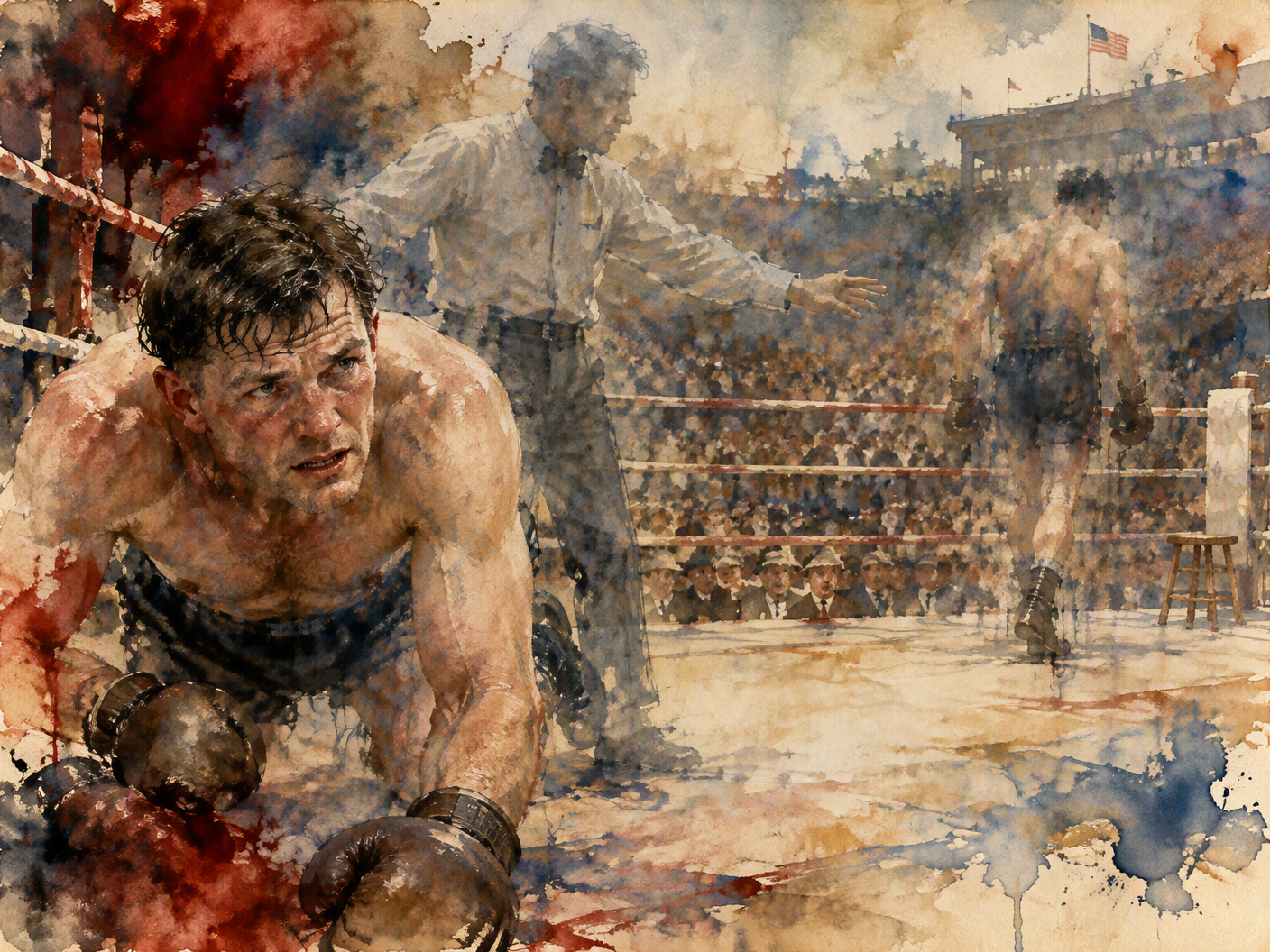
On September 22, 1927, at Soldier Field in Chicago, the seventh round changed the meaning of a fight that would otherwise have been settled by ten rounds and three official cards. Jack Dempsey drove Gene Tunney toward the ropes and knocked the champion down. Referee Dave Barry did not continue the count while Dempsey stood over him. Barry ordered Dempsey to a neutral corner, and only after the challenger moved away did the count proceed. Tunney rose, finished the bout, and received the unanimous decision. The disputed interval became the event’s enduring question.
The fight was a rematch between two men whose first meeting had already settled the championship in Tunney’s favor. Dempsey entered the Chicago contest seeking to take back the heavyweight title; Tunney entered as the defending champion. Their second encounter was scheduled for ten rounds, placing the decision in the hands of the officials if neither man ended the contest before the final bell. The arrangement left no ambiguity about the formal outcome: when the rounds were complete, Tunney had won unanimously.
The knockdown came near the ropes in the seventh round, after Dempsey landed a series of punches. Tunney went to the canvas, and the responsibilities inside the ring divided immediately. Barry controlled the fighters’ movements. Paul Beeler served as the official knockdown timekeeper, the man assigned to mark the count. But the count did not run continuously from the instant Tunney fell. Barry first required Dempsey to leave the area and take the neutral corner, creating a pause between the knockdown and the counting that followed.
That pause supplied the phrase later attached to the fight: the long count. Its force came from sequence rather than spectacle. Dempsey had knocked Tunney down; Barry had directed him away; Beeler’s timing function continued within the official procedure; and Tunney was given time to recover before action resumed. The controversy was not about whether Tunney had been knocked down. It concerned when the count began and whether the delay produced by the neutral-corner instruction gave the champion an advantage that the uninterrupted count would not have allowed.
In the ring, the instruction was part of Barry’s officiating. A standing fighter could not remain above an opponent who was attempting to rise, and Dempsey was sent to the neutral corner before the count continued. The procedure placed distance between the two boxers at the exact moment when Dempsey might otherwise have watched Tunney struggle to his feet. It also separated the referee’s authority from the timekeeper’s task. Barry governed the action; Beeler marked the count. Their roles became inseparable in the later argument because the disputed seconds lay between them.
Tunney recovered sufficiently to continue. The remaining rounds passed without changing the official judgment. When the ten-round rematch ended, the decision went to Tunney by unanimous vote. The result left Dempsey with a clear tactical memory of the seventh round and no corresponding alteration on the official cards. The fight therefore carried two conclusions at once: Tunney had been knocked down and still won the bout, while the procedure surrounding that knockdown supplied Dempsey’s camp with the basis for challenging how the contest had been administered.
After the bout, Leo P. Flynn, Dempsey’s manager and chief second, put the objection into writing. He filed a protest with the Illinois Boxing Commission, challenging the decision and the count procedure. The protest moved the dispute from the ring to the state body responsible for boxing oversight in Illinois. What had been a few seconds under Barry’s control became an administrative question: whether the referee’s handling of the neutral corner justified disturbing the result that had already been announced.
The commission did not reopen the case. It upheld Barry’s ruling and left Tunney’s unanimous decision intact. That action ended the formal route available to Dempsey’s camp. The commission did not convert the protest into a new hearing, order another contest, or replace the decision with a victory for Dempsey. Its response fixed the official afterlife of the episode: the knockdown remained part of the fight, the neutral-corner delay remained part of the count, and Tunney remained the winner.
The dispute endured because the procedure could be described precisely while its competitive effect remained arguable. Barry’s order was clear. Dempsey moved to the neutral corner. The count resumed after the movement. Beeler’s presence established that timing was an assigned official function rather than an improvised detail. But the surviving official outcome did not change. No later adjudication reversed or vacated Tunney’s victory, and the question of whether the delay definitely altered the result remained attached to interpretation rather than an official finding.
Later retellings often compress the fight into a single image: a champion on the canvas, a challenger walking away, and a count whose length seems to contain the whole contest. The fuller sequence is less convenient and more exact. Dempsey scored the seventh-round knockdown. Barry enforced the neutral-corner procedure. Beeler served as the official timekeeper. Tunney rose and won the ten-round rematch by unanimous decision. Flynn protested. The Illinois Boxing Commission refused to reopen the case. Those are the decisions and events that survived the argument.
The fight’s documented afterlife rests on that unresolved tension between an official decision and a disputed interval. The commission’s refusal preserved the result, while the seventh-round procedure preserved the question. The neutral corner became not merely a place Dempsey was sent, but the point at which timing, authority, and competitive advantage met inside the ring. Tunney’s title remained attached to the unanimous decision of September 22, 1927; the long count remained attached to the seconds before that decision could be completed.
Investigative Dossier & Evidence
Read the companion investigation notes, verified source claims, and primary documents.
Read the Companion Notes & Evidence Record →