
Scandals & Feuds ·
Inside Florida State’s Academic-Fraud Case
The NCAA found that three former athletics academic-support staff members provided improper assistance to athletes, much of it involving online exams in a music course.
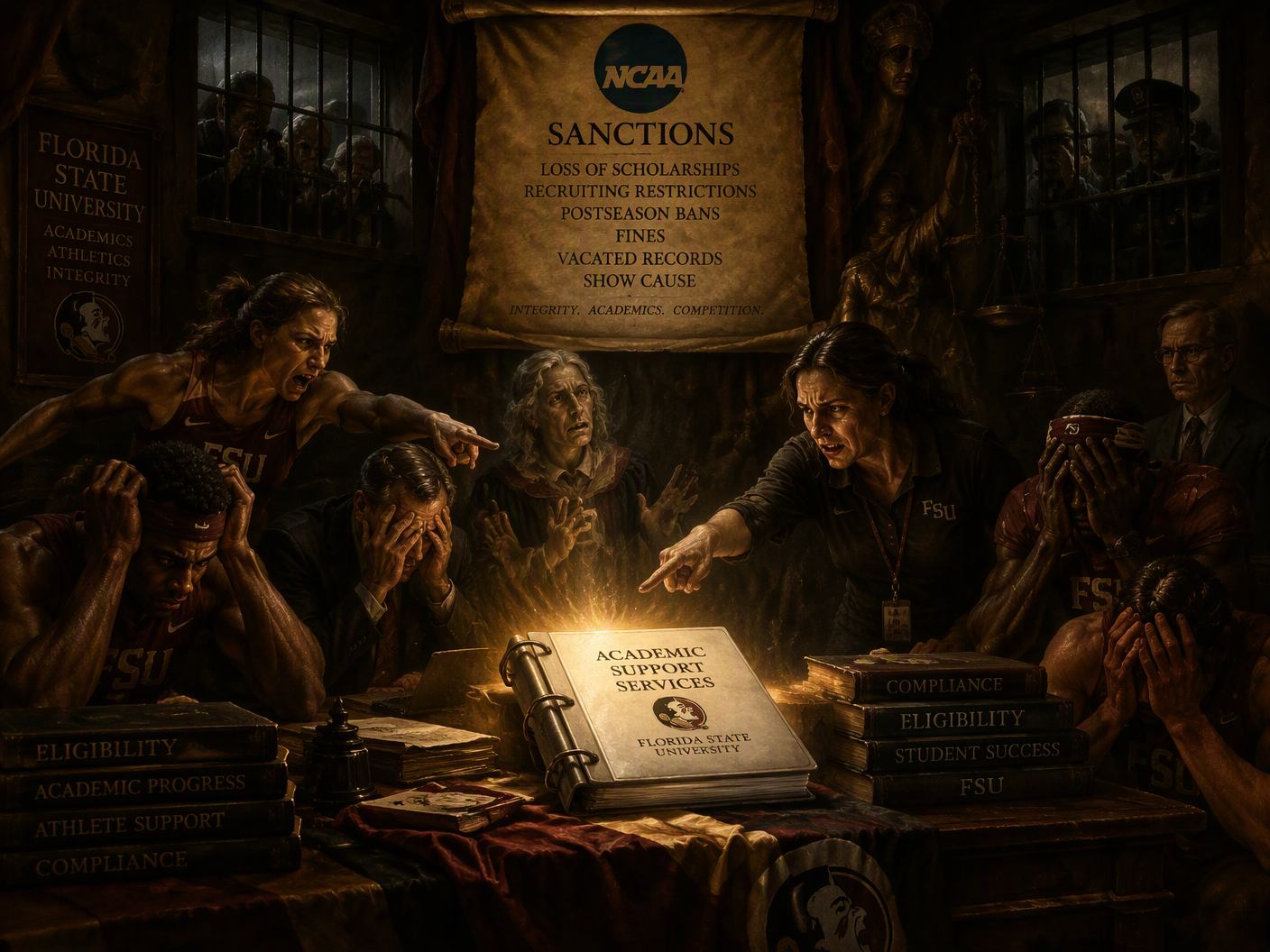
The three-ring binder in Florida State’s athletics academic-support office held past exams and reference materials for an online music course. According to the NCAA’s findings, it eventually accumulated answers to every exam question. Five athletes reported using its contents while taking exams. One said he had studied from the binder for the first test and found that one of its sample exams was identical to the test he took.
The binder was one part of an academic-fraud case involving improper assistance from three former academic-support staff members. On March 6, 2009, the NCAA imposed four years’ probation on Florida State, along with scholarship losses, public reprimand and censure, and an order to vacate athletic victories. Much of the fraud involved online testing in a music course during fall 2006 and spring and summer 2007. The infractions committee called the case “extremely serious,” citing the number of athletes involved and the nature of the misconduct.
A former tutor acknowledged providing answers to 55 athletes taking the course during the 2006–07 academic year. The committee also found that a former academic adviser had instructed the tutor to supply answers and directed at least seven track-and-field athletes to rooms where the tutor would be available during exams. Florida State believed there was insufficient information to conclude that the adviser had instructed the tutor to provide answers. The committee credited the accounts of the tutor and seven athletes.
The former learning specialist disputed the findings against her. She acknowledged keeping the binder in her office, where athletes had access to it, but denied expressly permitting them to use it during exams. Florida State could not confirm that every athlete who used the binder had obtained it directly from her. The university and NCAA enforcement staff agreed that she had provided correct answers to at least one athlete on his music-course exams; she denied giving athletes answers while they were taking an exam. She said she had understood the course’s open-book format to allow help from a tutor and viewed such help as a resource available to students.
The committee found that Florida State had failed to monitor the support office. Staff members were present during online exams despite office policies, and the university had not ensured an appropriately structured testing environment. It also had not reviewed a registrar’s report showing that athletes’ average grades in the course exceeded those of other students. The university and NCAA enforcement staff substantially agreed on the failure-to-monitor finding.
The consequences had already reached competition. Beginning in December 2007 and continuing into the 2008–09 academic year, 61 athletes who went through the eligibility-restoration process were withheld from 30 percent of their respective sports’ competition. Florida State played the 2007 Music City Bowl without two dozen football players, including several starters. The order to vacate victories remained disputed in October 2009, including 14 football wins.
At the October 2008 infractions hearing, a committee member asked university representatives what was wrong with a tutor helping an athlete during a graded exercise. The provost answered: “It is not the student’s work. You are evaluating someone else’s work, not the student’s.”