
Violence & Brawls · 3rd century BC–5th century AD
The Funeral Games, the Capuan Fighters, and Honorius’ Ban
Roman gladiatorial combat began as elite funeral display and became a state-backed institution of armed entertainment, military training, punishment, and imperial messaging. Its fighters included enslaved people and free-born volunteers; in 399 and again in 404, Honorius legally ended the games in the Western Roman Empire.
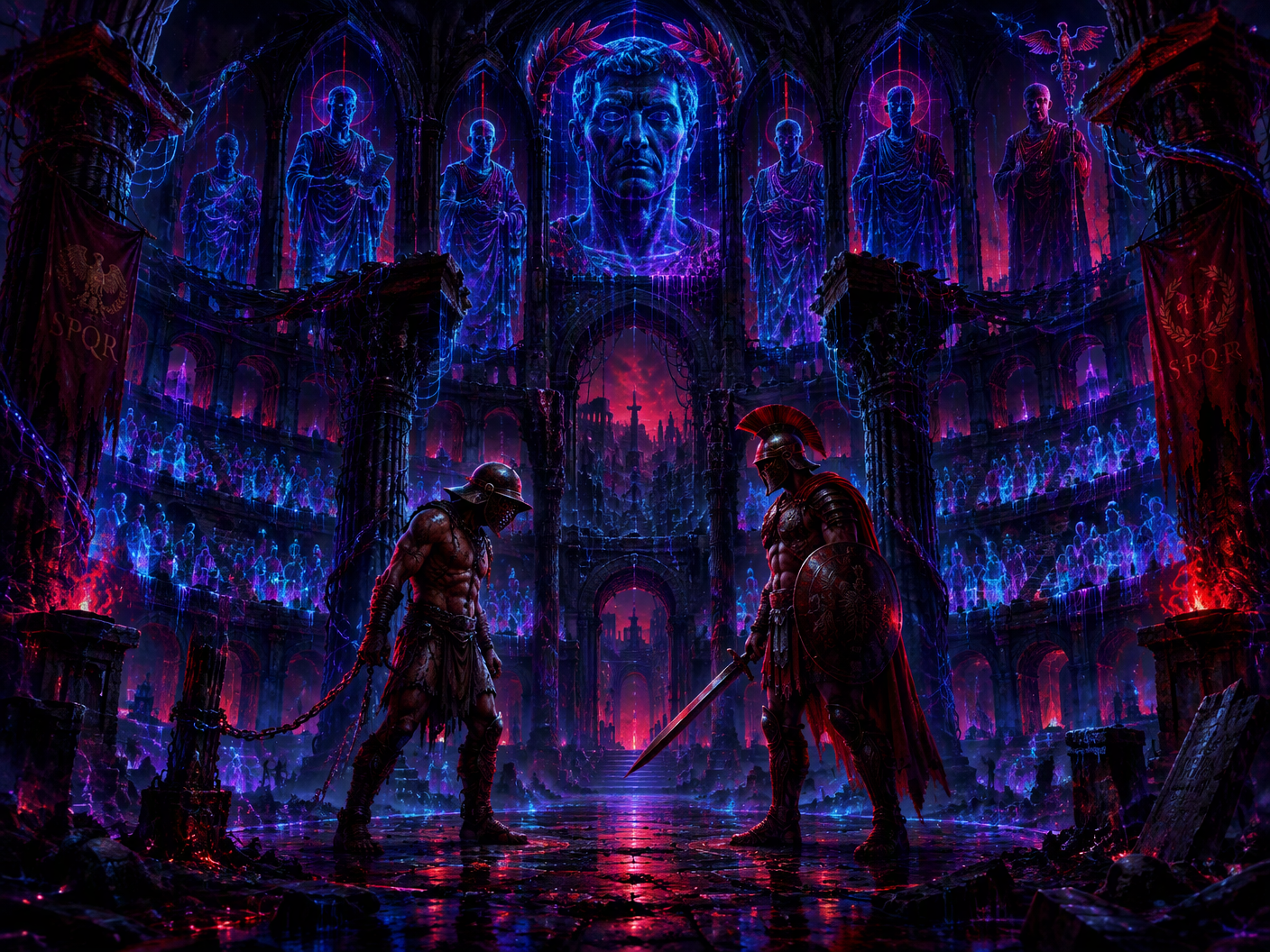
The fight began as a public act of violence with a purpose beyond the two men carrying weapons. Roman audiences watched armed combatants meet in the arena while officials turned injury, discipline, and survival into a managed spectacle. The fighters were not one kind of Roman. Some had been enslaved. Others were free-born volunteers who entered the profession by choice. They trained under harsh conditions, then appeared before an audience that had come to watch combat arranged by someone else.
The distinction mattered because later retellings made the gladiator into a single figure: chained, owned, and pushed toward a certain death. Rome’s own institution was less simple and more useful than that. It could absorb slaves and volunteers, separate them from ordinary civic life, train them for armed confrontation, and return them to the public as performers. Their legal status differed. The bargain did not. Each fighter surrendered control of his body to a system that made violence visible, repeatable, and profitable in honor, prestige, or political standing.
In 264 BC, the heirs of Junius Brutus Pera staged gladiatorial combat at his funeral in Rome. The dead aristocrat became the occasion; the living fighters became the display. This was not yet the full imperial institution later associated with Rome, but the arrangement contained its central transaction. A family converted mourning into public performance, and armed men supplied the physical fact of remembrance. The funeral gave the violence a respectable name. The audience supplied its value.
By 105 BC, Roman consuls had taken the contest into state hands. They staged games using gladiators from Capua and linked the events to military training. That decision changed the scale and the meaning of the practice. Combat was no longer confined to the memory of an aristocrat. Consular authority could summon fighters, organize a program, and present violence as preparation for war while also presenting it as entertainment. The arena became a place where Rome practiced its power in front of Rome.
The program could also turn away from fighters and toward prisoners. Arena spectacles included executions by exposure to beasts, placing condemned bodies inside a public schedule of punishment. This was not the same event as a formal gladiator bout, but it belonged to the same institution of managed violence. The distinction between combat, execution, and display remained visible in the program while the audience received them together: bodies under authority, danger arranged for spectators, and death made into a civic performance.
The men who entered the arena therefore occupied different positions before the law and the public. A slave could be compelled into the profession. A free-born volunteer could choose it. Both required training, and the training was harsh. The institution depended on discipline before it depended on courage. Fighters had to be prepared for repeated armed confrontations, not a single ceremonial clash. Rome did not merely expose violence; it cultivated specialists who could perform it on command.
The same Roman state that staged combat also used military victory to make meaning. During the campaign against the Quadi on the Danube frontier, Marcus Antoninus—Marcus Aurelius—commanded Roman forces in a war later carried into imperial memory. Cassius Dio wrote that rain and thunder aided the Romans in battle and that a legion became known as the Thundering Legion. Dio also preserved another explanation involving a magician. Victory arrived first. The story attached to it did political work afterward.
That campaign belonged to the same public culture that made the arena legible. Roman authority did not rely only on swords and formations. It relied on names, ceremonies, punishment, spectacle, and stories about favor from above. In the arena, trained fighters gave the state a controlled image of force. In Dio’s account, weather became part of the meaning of a battlefield victory. The distinction between fact and interpretation could remain contested while the public lesson remained useful: Rome possessed power, and power had an audience.
The arena was violent, but it was not governed by one permanent rule that every bout ended in death. Its programs included armed confrontations and the exposure of prisoners to beasts, yet those events should not be collapsed into a single form. Nor were all gladiators slaves. The institution was layered because Rome required it to serve several purposes at once: elite commemoration, military display, punishment, entertainment, and imperial messaging. Its strength came from that flexibility.
Centuries later, the Western emperor Honorius acted against the institution by law. In 399 he ended the gladiator games. In 404 he repeated the prohibition. The second order mattered because the first had not made the practice disappear from public life by itself. Honorius withdrew legal support from an institution that had served Roman families, consuls, military ambition, and emperors. The ban did not erase every spectacle overnight. It closed the official door.
By then, the gladiator had carried several identities through Roman history: enslaved person, volunteer, trained combatant, funeral offering, military instrument, condemned prisoner’s counterpart, and imperial advertisement. The arena had never been only a fight between two bodies. It was a public arrangement that assigned meaning to those bodies and charged authority with arranging the terms. Honorius’ laws ended the legal life of the games in the Western Empire. What remained was the institution’s residue: names, stories, and an empty place where the state had once scheduled violence.
Investigative Dossier & Evidence
Read the companion investigation notes, verified source claims, and primary documents.
Read the Companion Notes & Evidence Record →