
Scandals & Feuds ·
The Palace Station Case That Sent O. J. Simpson to Prison
Simpson said he was recovering stolen belongings and denied knowing his companions were armed. A Nevada jury convicted him of armed robbery and kidnapping in 2008.
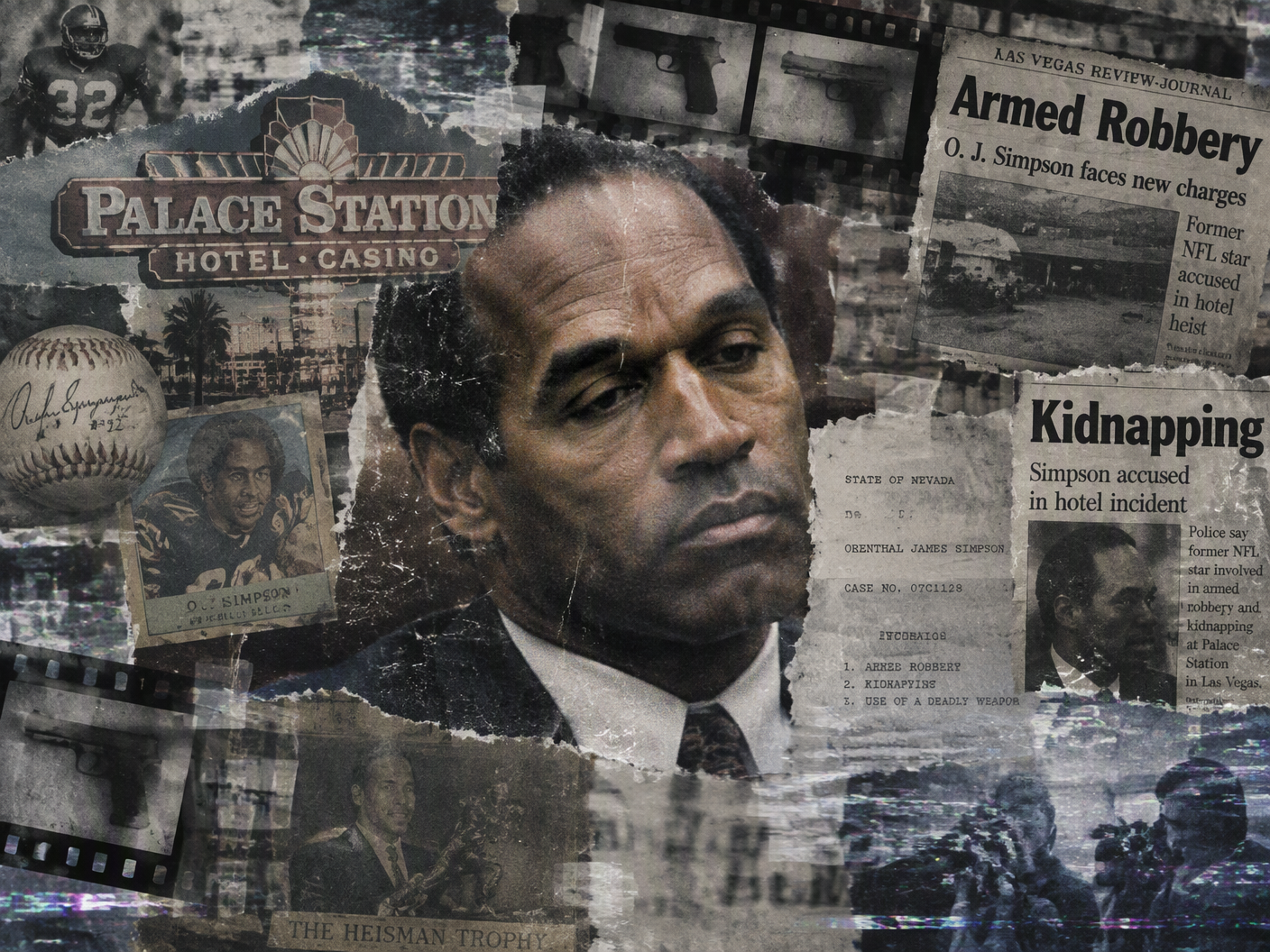
“Don’t let nobody out of this room!” O. J. Simpson commanded during a confrontation with two sports memorabilia dealers at Las Vegas’s Palace Station casino-hotel on Sept. 13, 2007. Collectibles middleman Thomas Riccio secretly recorded the encounter. On the recording, Simpson instructed other men to gather items he insisted had been stolen from him. What Simpson described as an effort to recover his possessions became a criminal case over armed robbery and kidnapping.
The confrontation involved dealers Bruce Fromong and Alfred Beardsley. Simpson told police he was trying to retrieve stolen property and did not know the men accompanying him were armed. His lawyers maintained that he wanted only his own belongings. But the defense acknowledged that other memorabilia—including Joe Montana lithographs and autographed baseballs—had been taken by mistake. The recording captured promises to return anything that did not belong to Simpson and his companions; prosecutors said several items, including the baseballs, were never recovered.
At trial, the accounts of the guns differed in consequential ways. Michael McClinton and Walter Alexander both testified that Simpson had asked them to bring weapons, an allegation Simpson’s lawyers denied. McClinton said both men wielded handguns but never pointed them at anyone; Alexander said his gun stayed in his waistband. Fromong and Riccio, however, testified that McClinton pointed a gun directly at them. Neither Simpson nor his co-defendant, Clarence “C.J.” Stewart, testified. Through their lawyers, both denied knowing guns would be used.
The witnesses also gave the defense grounds to question their interests. Four former co-defendants testified for the prosecution after taking plea deals. Riccio acknowledged on the stand that media outlets had paid him $210,000. Beardsley testified that Simpson had done nothing wrong and had been set up by Riccio. The jury nevertheless had recordings that carried the encounter beyond competing recollections: Riccio’s tapes captured planning as well as the hotel-room confrontation.
On Oct. 3, 2008, a Las Vegas jury found Simpson and Stewart guilty of all 12 charges against them, including armed robbery and kidnapping. Simpson showed little emotion as the verdicts were read, then was handcuffed and taken into custody. His lawyer, Yale Galanter, said he would seek a new trial and appeal. The verdict came exactly 13 years after Simpson’s acquittal in the murders of Nicole Brown Simpson and Ronald Goldman, but that earlier case was not the conduct being adjudicated in Nevada.
At sentencing on Dec. 5, Simpson stood shackled before Judge Jackie Glass and made a five-minute plea for leniency. “I didn’t want to steal anything from anyone,” he said, choking back tears. “I’m sorry, sorry.” Glass emphasized that the confrontation had been violent, that at least one gun had been drawn and that someone could have been killed. She also rejected any suggestion that her sentence was punishment for the earlier case: “I’m not here to try and cause any retribution or any payback for anything else.”
Glass imposed consecutive and concurrent sentences that could keep Simpson in prison for as much as 33 years, with parole eligibility after nine years, according to her clerk. She refused to let him remain free on bail during his appeal, and he was led away to prison. Glass rejected his apology. “It was much more than stupidity,” she said.