
Bizarre & Myths · 1960s
The 1969 Trade That Sent Nick Buoniconti from Boston to Miami
In 1969, Boston traded linebacker Nick Buoniconti to Miami, with quarterback Kim Hammond’s highlight films part of the personnel discussion. Buoniconti became a captain of Miami’s championship teams before later confronting dementia and pledging his brain to CTE research.
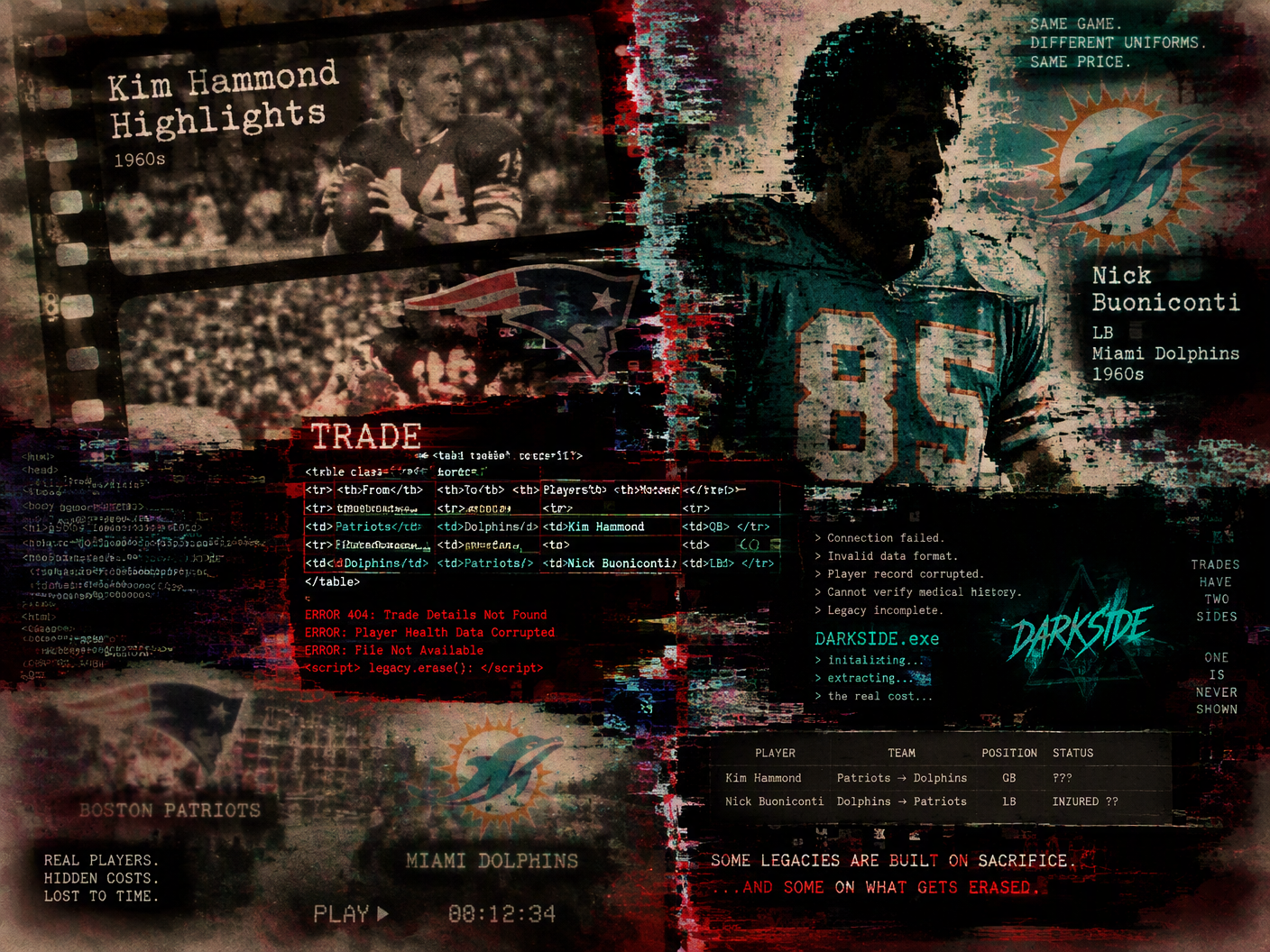
Boston traded Nick Buoniconti to Miami in 1969. The transaction moved a linebacker out of the Patriots’ building and into a Dolphins defense that would soon become the hardest fact about the deal. During the discussions, Miami supplied Boston with highlight films of Kim Hammond, a third-string quarterback. The film reels were part of the bargaining, a small object in a larger personnel exchange. Hammond’s name appeared on one side of the conversation. Buoniconti’s career was the piece that changed cities.
Buoniconti had spent six seasons in Boston, from 1962 through 1968. He was not leaving the game. He was being moved inside it, from one club’s plans to another’s. The deal carried no public legend at the time, no guarantee that Miami had acquired the defender who would define its next era. It was a football transaction conducted through players, evaluations, and film. A linebacker changed employers. A quarterback’s highlights entered the conversation. The rest had to be played out on grass and under pressure.
He stayed with Miami from 1969 through 1974, then returned for another season in 1976. That stretch gave the trade its weight. Buoniconti became a central defender for the Dolphins, not a temporary piece passed along after a season or two. His work placed him near the center of the club’s identity, where a linebacker’s value was measured in alignment, pursuit, and the willingness to meet a play before it reached the secondary.
Miami’s rise made the old exchange look different. Buoniconti became captain of back-to-back Super Bowl champions, including the 1972 Dolphins, who finished 17-0. The perfect season supplied the clean public image: disciplined defense, a closed circle, a team that completed every Sunday’s obligation. But the foundation was assembled through less polished decisions. Boston had let him go. Miami had taken him. The front offices had discussed Hammond and circulated film. Championships later gave the transaction a meaning that no negotiation room could have known in advance.
That is how trades survive. The paperwork fades into the background while the player remains visible. Buoniconti wore Miami’s colors through the club’s most durable period, and the trade became part of the explanation for how that defense came together. His career in Boston belonged to the earlier chapter. His career in Miami carried the captain’s title and the championship record. The movement between those places was simple enough to state and large enough to alter the shape of a franchise.
Years later, the body entered the story in a different way. Football had given Buoniconti a public life built around collisions, tackles, and the controlled violence of defense. In November 2017, he announced that he had been diagnosed with dementia. He also said he would donate his brain for CTE research. The announcement shifted the focus from the player he had been to the physical cost carried after the games were over.
The pledge was practical, not theatrical. A brain donation could give researchers material to examine after death, when the questions could no longer be answered by a press conference or a memory test. Buoniconti offered his own brain to that work. The announcement did not turn the 1969 trade into a medical case file. It placed his later health beside the sport that had made him famous, with the distance between a championship season and a diagnosis measured in decades.
The Concussion Legacy Foundation identifies repeated subconcussive impacts as the best available evidence-based explanation for CTE. Football tackles and collisions are examples of those hits, including impacts that may not produce a diagnosed concussion. That is the broader research context surrounding Buoniconti’s pledge. It describes a risk across the sport; it does not supply a private medical verdict about one former linebacker. The distinction belongs in the language of the case, even when the photographs and memories prefer cleaner answers.
There was another injury in the family, carried by his son Marc. Marc Buoniconti suffered a spinal cord injury while making a tackle for The Citadel. He later helped lead paralysis research fundraising efforts with his father. Their work gave the family a second public relationship with football’s physical consequences, one involving a damaged spinal cord rather than the repeated head impacts described in CTE research. The causes and injuries were different. The obligations that followed were not easy ones.
Nick Buoniconti’s football life therefore runs through three rooms: Boston, where he played from 1962 to 1968; Miami, where he became a champion and returned again in 1976; and the later public fight over what years of contact can leave behind. The 1969 trade began with a linebacker, a quarterback’s film, and two clubs making a deal. It ended, in the public record, with a captain offering his brain to researchers and a family raising money for paralysis research. The film reels disappeared. The consequences stayed.
Investigative Dossier & Evidence
Read the companion investigation notes, verified source claims, and primary documents.
Read the Companion Notes & Evidence Record →