
Bizarre & Myths · 1920s
The Name That Stayed on the Roster
In 1923, Jack or Howard "Dolly" Gray appeared for St. Louis and Green Bay before a reported impostor disclosure left the player’s identity unresolved.
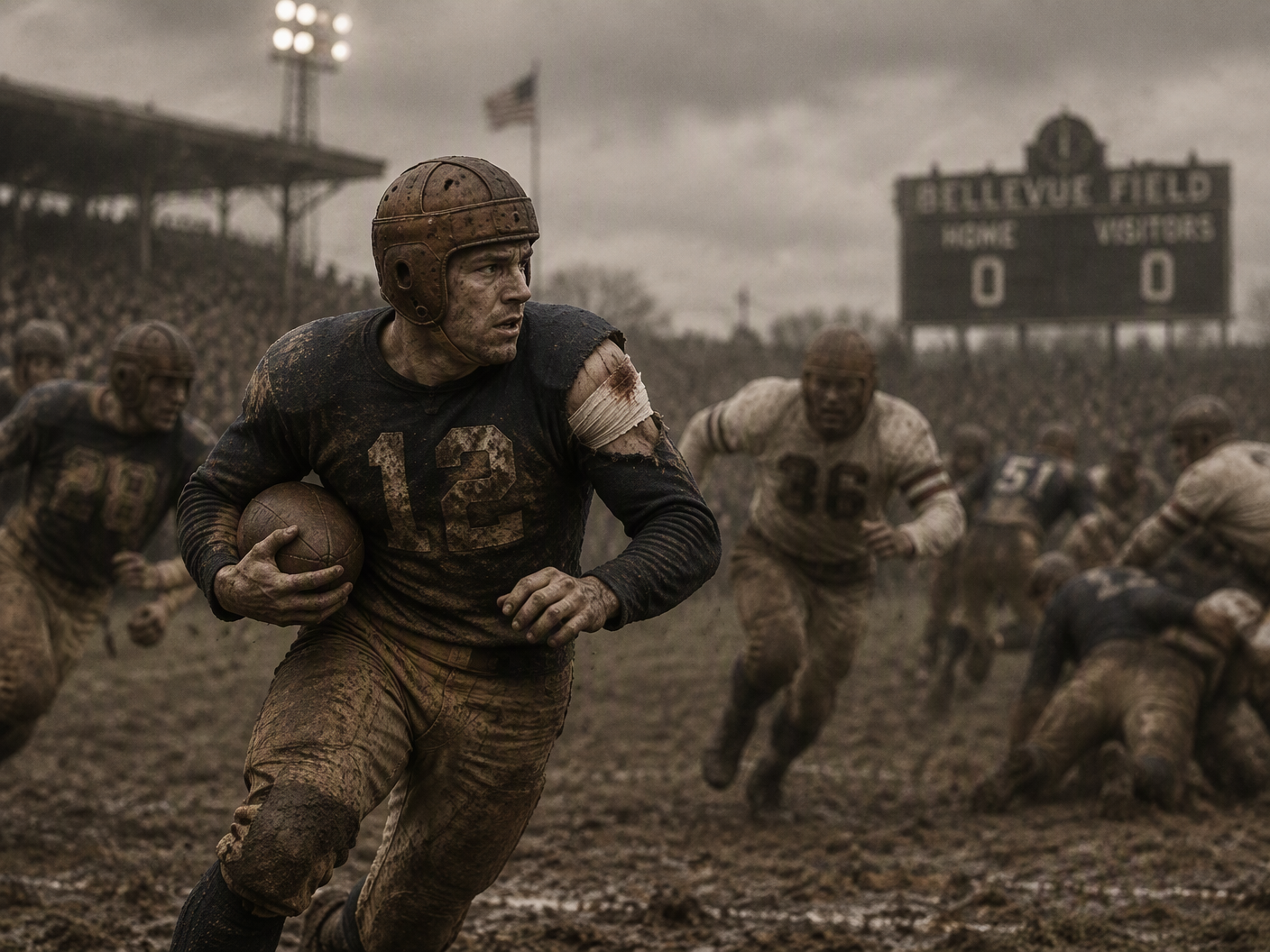
After the Packers game on October 7, 1923, Ollie Kraehe told Lambeau that the man St. Louis had sent to Green Bay as Dolly Gray was an impostor, according to the later PFRA account. The report is retrospective and does not provide a verified name. It does mark the hinge in the surviving story: a player who had entered the season under the name Jack or Howard "Dolly" Gray would remain in the record, while the identity behind that name would not become certain.
The game itself had been ordinary in its recorded facts. St. Louis and Green Bay met at Bellevue Field in Green Bay and played to a 0-0 tie. A St. Louis newspaper account reported that Jack Gray suffered a dislocated shoulder. The Green Bay Press-Gazette later described him as a "famous Princeton end," a phrase preserved as the newspaper's description rather than as an authenticated biography. The lineup, score, and injury were recorded; the life story attached to the name was not established by them.
The transfer had a practical motive in the later account. The All-Stars' finances were weak, and Kraehe was looking for much-needed cash. After the Cleveland game, the PFRA article says, he released end Dolly Gray to Green Bay for a sum of money. After the Packers game, it says, Kraehe told Lambeau the man was an impostor and intended to return what Green Bay had paid. The cash need created the movement; the disclosure changed what that movement meant.
The formal record is narrower than the retrospective explanation. Pro Football Archives lists Jack Gray as signed and later released by St. Louis in 1923, and signed and later released by Green Bay that year. Its player record therefore assigns the same name to both clubs without explaining the circumstances of either move. Those transactions, alongside the contemporary game accounts, establish a football presence for Gray; they do not conclusively establish the man's true identity.
That distinction is why the name has outlasted the biography. Packers historian Cliff Christl wrote in 2024 that the mystery of Dolly Gray's identity would probably never be solved. The surviving record retains Jack or Howard "Dolly" Gray in a game, an injury report, and two club histories. It preserves the transaction more securely than it preserves the player.
Investigative Dossier & Evidence
Read the companion investigation notes, verified source claims, and primary documents.
Read the Companion Notes & Evidence Record →